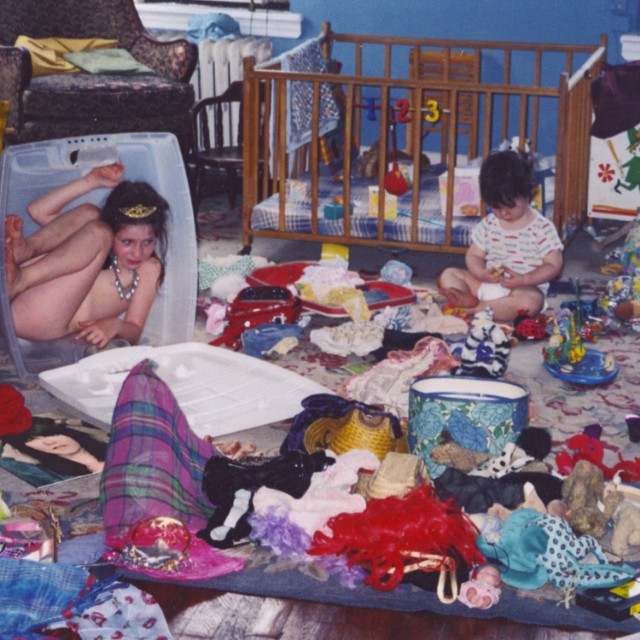
Sharon Van Etten, “Comeback Kid” (Remind Me Tomorrow, 2019)

Album cover for Sharon Van Etten’s, Remind Me Tomorrow.

By Chelsea Ives

Funky Electronica foregrounded by the folksy, haunting, but powerful vocals of Sharon Van Etten permeate “Comeback Kid” the fourth song on her newest album, Remind Me Tomorrow. “Comeback Kid” is also one of three of her newest songs to be released with a music video featuring her. The song seems to be meant as universal and individual all at once. “I’m recovering,” as SVE wraps her arms around herself in the video and looks away from the camera, the viewer is left with the sense that you are witnessing a private and intimate moment, as the video behind her sometimes shows flashes of her face. Although the moments seem individualized (especially in the video) the lyrics encompass more general ideas of the kinds of people you meet in your life – the hardly stays, the slips away, the turn arounds.

The video is a visual representation of the story SVE was trying to capture in the song, as she sings in front of screen which continuously plays clips of videos, lights, and abstract shapes which kaleidoscope together in a hypnotically confusing way. In a statement in Rolling Stone, SVE described her process for the song, “As the lyrics for ‘Comeback Kid’ unfolded, I realized I was talking about many selves: The kid, the adult, the sibling, the friend, the neighbor. I imagined a projector streaming over me of memories, unclear if they are mine or someone else’s, confronted by the disorientation of time and perspective […]”.

The final “comeback kid, come back,” which closes the song gives a cliff-hanger-like ending, suggesting that the stories of all these different “selves” are yet to be finished. Overall, the song has hopeful vibes which resonates with all – most of us being a sibling, friend, neighbor, and kid at heart.
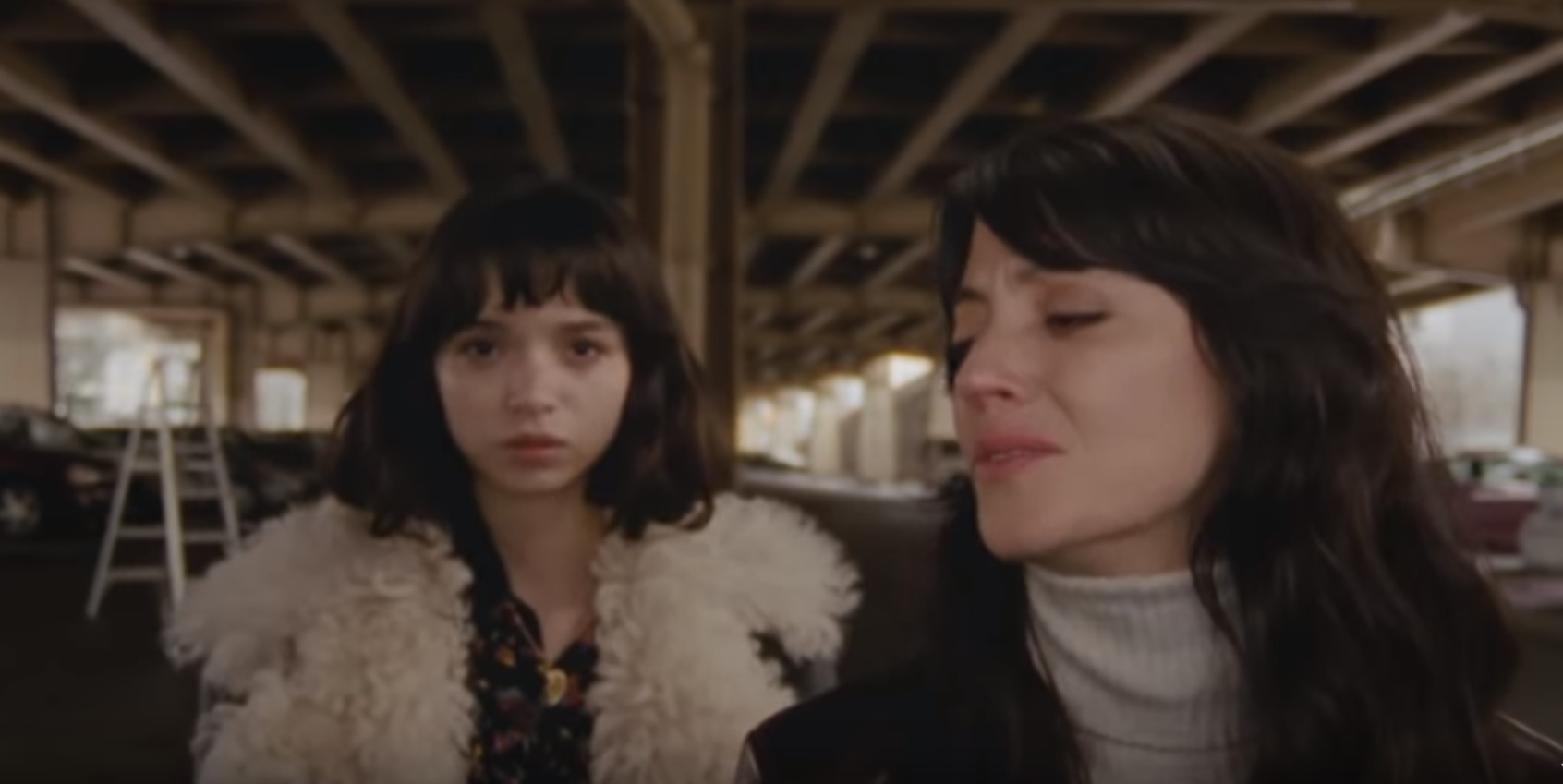
Sharon Van Etten’s, “Comeback Kid” (2019).

“Seventeen”, Sharon Van Etten (Remind Me Tomorrow 2019)

“Seventeen”, Sharon Van Etten (Remind Me Tomorrow)

By Maria Ceglie

Something seemed off the first time listening “Seventeen” from Sharon Van Etten’s recently dropped album, Remind Me Tomorrow. I found myself replaying it trying to figure it out. I went from feeling disturbed to being drawn into the stimulating sound. I could not understand it, maybe I wasn’t supposed to. I became frustrated trying to navigate through the pandemonium, so I decided to leave it alone and went to bed. Throughout the night something happened. I must have dreamt about my childhood, or a clear wake of nostalgia hit me in the face that had caused me to wake up singing the catchy lyrics “I use to be seventeen”. The rest was history.

Whether it’s synth-pop, indie rock, or alternative, it is hard to determine Sharon Van Etten’s style of music. Whatever it is, it makes this song beautifully unique. The instrumentals are an interesting combination of The Damnwells soft alternative strums combined with Echosmith’s “Cool Kids” and Tom Morello’s signature whinny guitar style. The song fades into a steady beat that introduces Van Etten singing “I know what you want to say” later diving into a pool of chaos with her screaming “I know what you’re gunna be.”

Her vocals along with her lyrics are definite and indefinite (doesn’t make sense, right?), but I think that’s the point. The electric guitar is similar as it includes heavy tabs and incomplete tabs creating the beautiful chaotic environment. Everything about this track contrasts and juxtaposes together revealing Van Etten’s emotional attachment to her younger self.

Someone told me once that everyone lives with an older/younger version of themselves. I believe that Sharon Van Etten’s “Seventeen” year-old-self busted out in this track and said hello to the world, as she end her song singing “You’re just seventeen.”

-Maria Ceglie

Welcome to Notes on Notes!

Aside

Thank you for visiting Notes on Notes! We hope you’ve enjoyed our blog so far!

Well folks, this is it. Our last week of classes, which means our last week of tunes! This week’s tracks will focus on “farewell” tracks from throughout the ages!

Stay tuned toward the end of the week for a retrospective look at 1994 in music, including album selections by each of our writers, and why they were so important to 1994.

Notes on Notes does not assume ownership over any of the songs or images incorporated on this website. All songs/images are property of the artists.
The Canadian Copyright Act permits the use of materials from a copyright-protected work. Our bloggers are here to discuss music and provide a total musical experience in effort to foster a love of music and musicians.
Notes on Notes bloggers adhere to the rules of the Canadian Copyright Act.

Nirvana, “All Apologies” (Unplugged, 1994)

By Mina Wiebe

There’s no doubt in my mind that experiencing live music from a favourite band or singer is awe-inspiring, and for some, life-changing. The rush of hearing the first guitar strum and recognizing the song you sing along to in the car every day on the way to work is a thrill like no other. Nirvana’s 1994 MTV Unplugged in New York album aims to capture this feeling and make it accessible in the best way possible; recorded during a live concert, the album transports the listener to the performance in a way that pre-recorded music simply can’t—and people love it. It was incredibly well received by both fans and critics in its initial 1994 release, not to mention its present-day relevance with a Youtube video of the album’s song “All Apologies” gaining a whopping sixty-nine million views. The listener can experience a Nirvana concert from the comfort of their own home— vocal cracks, audience murmurs, and all.

 “All Apologies” features lead singer Kurt Cobain’s live voice in all its glory; the performance is raspier and noticeably less smooth than the original In Untero album version, and while for other singers this may be an issue leading to inevitable critique and disdain from disappointed fans and critics, for Cobain it actually enhances the intentionally-imperfect murkiness that is 90’s grunge. The beloved subgenre is perfectly encapsulated in this live performance, with Cobain’s throaty singing illuminated by an accompaniment of a slow tempo, fuzzy acoustic strumming and minimal drumming.

In typical grunge Nirvana style, Cobain asks dramatic, angst-fuelled questions in the song such as “[w]hat else could I be?”, and he himself answers the question with an amplified scream:“[a]ll apologies”. The intense sincerity in Cobain’s voice is distinct and genuine, leaving the listener to wonder what Cobain feels the need to apologize for. The fervency behind his vocals leaves little room to question whether this is merely a performance of meaningless lyrics. Cobain appears to sing the song as a message from himself, to himself. He asks, and he himself answers.  

So what does Cobain feel the need to apologize for? One could take into account that this live album was released seven months following the tragic suicide of the singer, and when paired with the raw intensity of the live vocals, the song’s apologetic lyrics become much darker. Without referencing specifics from the singer’s suicide note, it is apparent that he struggled with the guilt of feeling unappreciative of his fans and loved ones. In this live rendition of “All Apologies”, the sincere passion fuelling Cobain’s voice is perhaps his way of delivering what he hopes is a sincere apology to anyone who cares to listen. The live track is successful in relaying this sincerity in a way that only a live performance could. The claps and hollers featured at the end accompanied by Cobain’s casual banter with the audience reminds the listener of the earnestness behind this very human performance. Regardless of the singer’s tragic end, the performance is remarkable in itself, but the added history makes Cobain’s live vocals that more haunting.

Boyz || Men, “I’ll Make Love to You” ( ||, 1994)

By Genna Dara

“Girl, your wish is my command/ I submit to your demands/ I will do anything, girl you need only ask”
If the first couple of chords didn’t pluck at your heart strings, then ladies these three lines got you for sure. Sexual lyrics mixing with a sentimental sound of piano and bass make for the perfect recipe to an iconic Boyz 2 Men song.

The instrumental alone makes the listener feel instantly relaxed with the slow tempo and consistent rhythm. Definitely leaves you in the mood to light some candles and bask in the melodic ambiance. Every girl in the 90’s wanted a significant other like this, and every guy wanted their swagger. There’s a reason this love ballad stayed on the Billboard charts for fourteen weeks, and spent five of those weeks with their album, ||, at number one. Simply because people fall in love with the way they talk about love, hopelessly romantic and wholesome.

Members Nathan Morris, Wayna Morris, and Shawn Stockman create such beautiful harmonies and melt you into a puddle of emotions, that you wish they could serenade you forever and yes, it makes you wish that your partner would deliver you a hand-written love letter chalk filled with raw emotion and their undying love for you all tied in a neat package with a rose as the cherry on top.

Unlike so many R&B artists today, they don’t have to swear or compare the number of women they’ve slept with on their tracks in order to convey their passion and love. They should start taking notes out of Babyface’s lyric books.

So I leave you now to experience the romance for yourself- go and light some candles, plan a date night, call up your love. For brownie points, learn the song and serenade her. You’re welcome.

-Genna Dara

Portishead, “Sour Times” (Dummy, 1994)

By Julia Ristoska

Have you ever watched a horror film and knew something was about to happen as the background music gradually gets louder? You see the protagonist stop, and with wide eyes stare into space waiting for something to pop out from the blue. In a sense, you feel like they are almost waiting for the worst to happen, so they can release the anxiety and paranoia they hold inside their minds. When I first heard “Sour Times” by Portishead I immediately pictured myself as the protagonist in a horror film, or a even better term would be sci-fi horror. The floating ring of the synthesizer jumped out at unexpected times and continuously haunts the whole song.

“Sour Times” starts out with a heavy thump of the bass guitar in which mimics the sounds of footsteps or a pounding heart. However, the bright sound of the synthesizer that was swirling on top of the melancholic foundation created a whole different feel to the song. Somehow, It gives a vibrant burst of energy and complements the dark-like aura.

When the last deep bass drop ended to signal the start of vocals, I expected there would be screaming. In contrast, the lead singer, Beth Gibbons voice was soft and steady. Yet, she has a vocal range that allowed for effortless transitions from low to high notes. This was best captured when she sang the chorus. Her voice smoothly grew louder near the end of the emotional lyric “….‘Cause nobody loves me” and transitioned to a low whisper when she sang “…not like you do.” Her vocal technique is simple but creepily alluring to the ears of listeners, and makes you want to listen until the end. Interestingly enough the ending left me with a good cliffhanger. The synths cried with a “waah wahh wahhh” followed by a drum solo and the only thing needed was a “to be continued” sign

Blues Traveler, “Hook”

By Danielle Bulhoes

This song is pretty genius. No, really!

The lyrics are an in-your-face critique on popular songs that don’t offer much except for a catchy “hook”. The singer expresses their frustration with songs like this, as well as the consumer that continues to listen to them.

“It doesn’t matter what I say as long as I sing with inflection”, is a bold choice of opening words. You can almost feel John Popper, lead singer and harmonica player, grabbing you by your shirt collar and trying to shake some sense into you. He continues to berate the lazy listener for not wanting something more from their music, something more meaningful.

In proud defiance, Popper rages that;

“Could be financial suicide but I’ve got too much pride inside

To hide or slide

I’ll do as I’ll decide and let it ride till until I’ve died

And only then shall I abide by this tide

Of catchy little tunes

Of hip three minute diddies”

Finally losing his cool, sick of the gluttonous apathy of the music industry and the dull minded people who never ask for better, Popper threatens to “burn all your cities to the ground”.

Because only through the awesome cleansing power of fire can the world be remade! The unworthy are left to despair as a new world order comes to power, rebuilding the industry of music to a standard that NO ONE BUT GOD CAN TEAR DOWN!!!!!

Whoa.

Sorry, I think I got a little carried away there. Hahaha.

Where did these matches come from?

Anyways, after this moment of homicidal rage, Popper resigns himself and basically says, “Hey, it’s ok if you’re too lazy to care about what you’re listening to. It just means I don’t have to try as hard to take your money.”

Do yourself a favour. Get off your ass and listen to Hook by Blues Traveler.

Bad Religion, “Stranger Than Fiction” (Stranger Than Fiction, 1994)

By Michaela Maxey

As soon as the drums and guitar open the song I immediately start nodding along. I never nod to anything, so this is a huge moment already. The beats are quick and consistent, making it super easy to get lost in just the instruments of the song. As the chorus comes closer, and by this point I’m full-on head-banging, all members of the band join together sounding almost choir-like. It is super easy to join in and sing with them.

Then a surprising silence from the instruments as Greg Graffin sings, “and the obituaries”. Although I was lost in the instrumental of this track, it is impossible to not focus on the lyrics at this point. It may sound like  “cockroach naps” and “rattling traps” are just fun words to say, but they actually delve deeper into the bizarre world that is our own.

The lyrics critique all aspects of society, from child abuse, drugs, murder, suicide, and depression. The band does not censor anything, resulting in a pivotal song that aims to bring about change. Although my original thought may have been, “This song is nothing short of an epic sing-along with your friends”, the song definitely works as a major wake-up call to society that maybe things are not going as smoothly as it seems.

So why have such an upbeat tone to underscore such dark lyrics? Well, if you can sing along easily you can spread the message easily. Despite being released in 1994, it’s shocking that the lyrics still hold true to today’s society. We cannot ignore the message that Bad Religion and many other bands both old and new attempt to give, that is something needs to change because what we’re doing is not working.

The most unbelievable aspects of our society, our truths, really are stranger than fiction.

Nirvana, “The Man Who Sold the World” (Unplugged, 1994)

Nirvana, “The Man Who Sold the World” (Unplugged, 1994)

By Allesandro Rotondi

nirvana5

And there they were, unplugged and stripped down as most audiences had never heard them before. On the stage of MTV’s Unplugged, Nirvana performed an intimate show for fans that were blatantly unaware that in a few months the band would be no more, due to the tragic and untimely death of frontman Kurt Cobain. With “The Man Who Sold the World,” a David Bowie cover released as a leading single to this posthumous live album, it is easy to assume the death of Cobain had a hand in the song’s popularity. However, it likely something less. Or perhaps more.

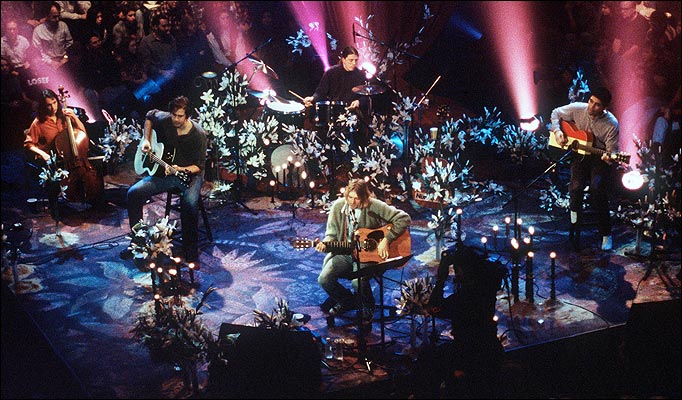
This performance, captured live with microphone squeals and guitar booboos intact, allowed an intimate insight into the heart of the band, Kurt, and most of all, the music. Famous for the 90’s grunge sound of distorted crunch guitars, bar chords and angst-driven drum beats, this was a chance for acoustic guitars and bass, drums hit with bamboo sticks, and even a guest cellist.

“The Man Who Sold the World” has nothing to hide. It is a performance with heart on sleeve, and perhaps that was the appeal to heartbroken fans and music lovers crooning for a chance to get inside the head of their fallen hero. Twenty-five years later, with the death of David Bowie still somewhat fresh on the radar, this song and performance is still as relevant as ever. Perhaps even without context, this tune comes off with an airy and almost eerie vibe, as though for three minutes and forty seconds, you have actually come face to face with the man who sold the world. As Cobain sings lines like “I must have died, a long long time ago,” accompanied by a haunting and unwavering three-note guitar melody, it is difficult not to think that Kurt Cobain, a man who sold the world, may actually be singing about himself.

See below to watch the performance, recorded live off the floor:

The Tragically Hip, “Grace, Too” (Day for Night, 1994)

By Chelsea Ives

Grace, Too by Canadian rock band The Tragically Hip shows how seamlessly poetry and music work together to create something otherworldly. The smooth guitar riffs and drum beats make up the basis of the background while lead singer Gord Downie’s unique and iconic voice projects each word with a fervour and freedom that’s sure to leave the listener in awe. The song is from the groups 1994 album titled Day For Night. The song is a classic of the band’s, and a favourite of true ‘Hip fans.

Interestingly, lead singer Gord Downie is known to have frequently altered the lyrics of his songs while performing live. Especially this song, which I can vouch from personal experience. The first line of the song, “He said, ‘I’m fabulously rich’, ” was often changed during their live performances to, “We are The Tragically Hip,” and the same was true when I saw them perform. As I watched Gord Downie, suffering from terminal brain cancer, perform his fourth-to-last show in Toronto in August of 2016, I could not recall a man who looked more emotionally raw than Gord did while singing this song. It was the final song they played (the last after three encores) and as he opened with, “we are the Tragically Hip” and the whole Air Canada Centre (as it was at the time) erupted into a frenzy of emotional cheers for a beloved Canadian band whom, we all understood, would never perform together again.

Thanks, Chelsea.

This video is The Tragically Hip at their 1999 Woodstock show, and it is an example of Downie changing the lyrics to Grace, Too.