1994 in Music—A Renaissance

Photo courtesy of Blank Newspaper

1994 was a year of a renaissance in all aspects of popular culture. The internet was rising in mainstream popularity: Aerosmith was the first band to give a song away for free online. Britpop was peaking in popularity with bands like Oasis and Blur, and the UK was answering to the grunge scene in the US.

While 1993 was considered “the year of hip-hop and R&B” according to Vibe magazine, 1994 offered a rebirth of grunge and rock and roll that seemed to blend genres and advocate for political justice. Grunge, funk-rock, and pop-punk bands like Nirvana, Red Hot Chili Peppers, and Green Day were at an all time high. So what caused this drastic shift from hip-hop to the scene we know today? It may help to look at a break down of the year.

JANUARY:

The beginning of 1994 saw an attempt to heal old wounds with Bryan Adams performing in Vietnam in January – the first major Western artist to do so since the end of the war nearly 20 years previously. A fitting start to a year that saw the music scene grow by leaps and bounds across the world. Shortly after, Alice in Chains released their album Jar of Flies, the first EP ever to debut at No. 1 on the Billboard 200, foreshadowing the rebirth of rock and grunge that ‘94 would offer.

FEBRUARY:

February introduced Green Day’s third studio album Dookie. Punk has always been a major musical genre, but by 1994 the genre had become associated with the sound of angsty teenage drama that, quite frankly, was getting old. Yet, one band rose above the typical sound and was able to redefine the musical genre that is punk. While Green Day’s album Dookie was originally meant to be a parody of all punk that came before it, it ultimately launched punk into a mid-90’s revival and changed the genre from angsty teen to a much more upbeat sound. Through offering this new sound, Dookie became an instant success. By March of 1995 it had won a grammy for Best Alternative Album. Although Dookie only made it to the 2nd highest spot on the music charts, it has sold over 20 million albums to-date and turned the genre of “angsty teen” into a new upbeat, derisive sound which is known today and can be heard across like Blink 182, Sum 41, Good Charlotte, and Avril Lavigne.

MARCH:

1994 was a pivotal year for industrial rock with the once alternative genre making its way into the mainstream music scene following the release of Nine Inch Nails’ second album The Downward Spiral. People went nuts for the release, enjoying its combination of industrial rock, techno, and heavy metal sound; it received positive response from critics and fans alike. Not only did it reach number two on the Billboard 200, but it went on to sell 3.7 million copies in the United States, earning it an impressive quadruple platinum certification. The once underground genre had risen well above the surface.

Despite the positive response from some, like with any album release, there were also some criticisms. The main critiques of the album revolved around the dark and often gruesome lyrics. Social conservatives especially protested the album’s treatment of religious themes; in the song “Heresy” for example, the lines “God is dead and no one cares/ If there is a hell, I’ll see you there” sparked intense criticism. Others were also hesitant about the sound’s movement into the mainstream music world, believing that industrial rock was too harsh and extreme. But regardless of the backlash and opposition, the album still contributed to industrial rock’s new mainstream presence, and The Downward Spiral is retrospectively recognized as one of the most important albums of the decade.

APRIL:

One of the most eventful months in music history—Kurt Cobain, lead singer of Nirvana, was found dead in his home. His death was ruled as a suicide from a self-inflicted gunshot wound 3 days earlier. He had been missing for six days.

A month before, Cobain fell into a coma after an overdose. His management agency stated that he was suffering from fatigue and influenza, and that the overdose was accidental. Cobain’s wife, Courtney Love, told Rolling Stone that he took 50 pills and that there was a “definite suicidal urge.” This information was only released after his death and the incident was confirmed to be an earlier suicide attempt by Cobain.

Anthony Kiedis, lead singer from Red Hot Chili Peppers, stated that, “The news sucked the air out of the entire house…‘The world just suffered a great loss.’ Kurt’s death was unexpected … It was an emotional blow… for all of his screaming and all of his darkness, he was just lovable.”

After his death, every American musician mourned together and each paid tribute to Cobain in one way or another. Nirvana touched the lives of every music lover. Indeed, the death of Kurt Cobain was a collective loss for the world.

MAY:

In May of 1994, Nelson Mandela had left a globally historic mark in politics for being the first ever black Prime Minister of South Africa. Not only is he known for his anti-apartheid movement, (which was concerned with removing policies that enforced segregation between South Africa’s white and nonwhite citizens), and  his revolutionary position as a political leader, Mandela paved the way for many artists learning to combine politics and music.

In the late 60’s to late 80’s, Nelson Mandela was imprisoned for treason against the apartheid government. During this time music played a huge role in Mandela’s personal, spiritual, and political life. While he was serving jail time, artists across the globe were protesting for the very things he believed in—freedom, equality, peace, and specifically anti-apartheid. In 1985 a song was released by Artists United Against Apartheids. Called “Sun City,” the song was a public pledge made by over 50 artists, promising a cultural boycott against South Africa until the apartheid ended. According to Los Angeles Times, the song “for the first time brought together on record superstars of rock and R&B with the kings of a rising young genre called hip-hop.” Not only did “Sun City” fuse genres and artists together, but also merged nations such as South Africa and North America in order to put an end to racial segregation and discrimination.

1994 was a year known for addressing politics in music and we can salute Nelson Mandela for giving us the opportunity to address important political movements through music. Mandela even said so himself that, “Music is a great blessing. It has the power to elevate and liberate us. It sets people free to dream. It can unite us to sing with one voice. Such is the value of music.”   

JUNE:

In June, Aerosmith released the first free full-length song ever to be available on the internet. The song, “Head First,” was downloaded over 10,000 times on the web server CompuServe within the first eight days of its release. 1994 was a pivotal year for music, not only in sound, but in distribution. With the birth of the internet 5 years previously, it changed the way music was consumed from 1994 on. 1994 saw a shift towards online databases which would revolutionize the way music is distributed and accessed.

Although the internet by no means took off in 1994, it without a doubt paved the way for how music streaming would be transformed today. Having had both positive and negative effects on the music industry since, the internet created a new platform for music to be available on—which is arguably the most important and widely used way of consuming music today. YouTube, Apple Music, SoundCloud and Spotify are just a few of the online streaming services which depend on the availability of the internet for their success.

The internet was also responsible for the popularization of the Indie genre, as the internet gave independent artists a wider audience without the difficulties of finding a major label to sign you. Especially with new technology available today, every new laptop Apple releases has the ability to record music, increasingly better than what makeshift technology garage bands had in 1994. The internet gave people an audience then just as it continues to give burgeoning musicians an audience now.

The early 1990’s also saw the modernization and popularization of different methods of producing music as well. For example, the synthesizer, an electronic instrument which generates audio signals and converts them to sound, was first created in the 1960’s. By 1994, however, synthesizer’s were reimagined into compact, portable machines, and (thanks to the popularization of the internet) began to appear in computer software. The synthesizer software became available for personal computers – which made it even easier for at-home garage and Indie bands to record music.

Not only was the synthesizer popularized, but so were electric loop systems. Although not yet called “loop pedals,” the early 1990’s saw the introduction and widespread sale of live electronic recording devices. Musicians like Ed Sheeran would not exist, or at least not be able to play live shows without the loop pedal. Technology boomed in the early 1990’s giving musicians the ability to play alone by creating machines which allowed them to do more with less.

The internet is responsible for changing the way music has been produced, accessed and distributed, and the technological innovations of 1994 were a huge step for musicians-kind. We are still living in the age of the internet; everything we want is instantly accessible right at our fingertips. When all I need to do is say, “Hey Siri, play ‘Black Hole Sun’”, what is the appeal of going out and buying hard copies of music anymore?

JULY—AUGUST:

July saw the launch of two popular festivals: Yoyo a Go Go, a punk and indie rock festival in Washington, and Verbier Festival, focusing on classical music, in Switzerland. As SPIN magazine described, “the first Yoyo blossomed in the damp heat that followed Seattle’s grunge explosion.” It also marked the first time that Krist Novoselic and Dave Grohl performed together after Kurt Cobain’s death, in an unscheduled performance with The Stinky Puffs. Yoyo was held four times up until 2001, and Verbier festival still continues annually to this day.

Later, August saw a continuation of music’s growing ties with the internet. On the 13th, Sting released a CD copy of Ten Summoner’s Tales, which was the first time a physical music unit was sold and shipped entirely because of the internet.

Jeff Buckley’s only studio album Grace was released on August 23rd, and despite a mix of good and bad reviews, it barely cracked the US Billboard 200, peaking at #149. Twenty-five years later, it has grown to be legendary, and has been named platinum several times over worldwide.

On August 31st, across the pond from the US, Oasis’ debut album Definitely Maybe exploded onto the scene, quickly becoming the fastest selling debut album in the history of the United Kingdom. It was around this time that the term Britpop was coined to describe the musical culture growing around British music in the mid-90’s. Britpop was seen as the answer to the US grunge scene, contrasting the dark themes and sounds with poppy and catchy alternative rock.

The end of summer was commemorated with a 3-week 25th anniversary festival of Woodstock in Saugerties, New York, commonly referred to as Mudstock. Bad weather and copious amounts of mud didn’t stop the artists or audience from rocking out for “2 more days of peace and music”. The festival featured all kinds of musical performances including Sheryl Crow, Metallica, Greenday, The Allman Brothers Band, and Salt-N-Pepa. The most memorable event of weekend party was in the middle of Green Day’s setlist, guitarist Billie Joe Armstrong interrupted their playing to start a massive mud fight with the audience on the South Stage.

Meanwhile, almost one thousand miles away R. Kelly was bringing the “love” into “love and hip-hop”. On August 31st, he drove to Illinois with his “close friend” and mentored student, Aaliyah to be married. This became quite the scandal and a lot of speculation rose from the matrimony , seeing as there was a 12 year age gap between the artists and Aaliyah was only 15 at the time. Aaliyah never confirmed that the marriage was official, only telling the media that “they were just rumours”, until she confessed that she lied about her real age on the court documents and that she was too young at the time to properly consent to anything without her parents’ permission. The marriage was annulled only a couple of months later and she cut off all contact with Kelly altogether.

SEPTEMBER:

Autumn was the time for falling in love with Boyz 2 Men’s melodic harmonies as they  resurged the R&B genre back onto the charts when they released their single, “I’ll Make Love to You” on September 3rd. It has remained no. 1 on the Billboard Hot 100 for 14 consecutive weeks and this was the longest running number-one of the entire year until it was beat out by another one of their songs, “On Bended Knee”.

OCTOBER:

October offered a launch of the nu-metal genre thanks to the band Korn, who released their self-titled album on the eleventh of the month. Critics considered how Korn established the new wave of metal, and influenced other popular bands such as Slipknot. In a year where grunge and rock takes centre stage nu-metal was creeping up in popularity near the end of 1994. The album went gold in the United States in 1996 and recieved platinum one year later.

On the UK side, Irish rock band The Cranberries released their 2nd album No Need to Argue. This album featured one of their most successful songs “Zombie,” a political protest song with aggressive lyrics that fit the mood of 1994. The song was dedicated to two young victims of the Warrington bomb attacks of 1993.

NOVEMBER—DECEMBER:

The death of Nirvana frontman Kurt Cobain continued to come up as a hot topic in the later month of November. Previously on November 18, 1993 the band performed acoustically for MTV unplugged. The band took inspiration from Mark Lanegan’s 1990 album The Winding Sheet, which was characterized for having a stripped down sound. The aesthetics of the room during the performance mimicked the mood and look of a funeral. Cobain requested stargazer lilies, black candles and a crystal chandelier, all which foreshadow the tragic event that occured in April the following year. It was not until November 1st, 1994 that the band released their first album after Cobain’s death, titled Unplugged in New York. Their live performance gained popularity, and was different than the other Unplugged performances on MTV. The sound, mood, and aesthetics of this performance were unforgettable, which lead them to win the Grammy award for Best Alternative album in 1996. One year later, it was certified 5x platinum.

In December, Warner Music Group bought a 49% share in the record label Sub Pop, a deal believed to be worth 30 million. At the time Sub Pop was an independent label, most famous for releasing Nirvana’s debut album Bleach and being synonymous with the Seattle music scene, but after the international breakthrough of grunge, many of the label’s bands took Nirvana’s lead, and signed to larger, more commercial labels. This deal terminated Sub Pop’s independence.

IN RETROSPECT:

There is no doubt that 1994 had its fair shares of highs and lows. From the death of Kurt Cobain, to Britpop making a comeback in the American music scene, it truly was the year of a renaissance. 1994 offered the emergence of the new upbeat punk, the birth of the internet that changed the way people accessed music, and the continuation of using music as a political platform. All the things we see in today’s music scene were influenced by what took place in 1994. It truly was a rich year that left a lasting impression on the world.

“This Town” by Kygo ft. Sasha Sloan (2017)

“All of my friends are settling down/ Their only kids but their married now/ Let’s follow the lights, follow the crowd/ Baby we gotta get out/ Let’s get out of this town”

The first time I heard “This Town” was on a scorching hot summer day. It wasn’t like it was a “nice” hot either, it was painful. I was on my way to work and I was already sweating thinking about the huge paint job that was waiting for me once I get there. The first thing I remembered about this song was how the beat, instrumentals, and vocals all fused together to create a “chill” atmosphere in my tiny SUV. It helped to set my mind somewhere else rather than my unconditioned vehicle. With its downtempo and pinches of dance that remain constant throughout the track, it literally made me feel like I was on a much-needed break from reality. However, something I didn’t pay attention to the first time listening to this song were the lyrics.

               Once I replayed the song a few times, I noticed that Kygo created a beat that works extremely well with Sasha’s vocals and the overall lyrical meaning of song. Sasha’s vocals are so soft and so calm that it would make any runner’s heart rate stabilize after the verse is sung. As for the meaning, the song is about slowing things down. Instead of conspiring to the same old routine of eat, work, sleep, repeat, this song suggests that we are all still young and should be experiencing and enjoying the world for what it has to offer. Just like Sasha Sloan sings, “I don’t wanna live my life in circles/ I just wanna find an empty road/ Let’s get away from here, let’s go.” So, let’s all get away and enjoy this beautiful world that gets lost in the everyday routine. The soft acoustics in the background with pinches of dance, the little twinkling that is heard in the background, Sasha’s vocals, and the lyrical nuances all fuse together to create to tell us all— “Hey! take it easy”

-Maria

“Tokyo” – BrockHampton (2017)

By Anthony Trocchi

Brockhampton is a newer hip hop groups that interestingly met each other through an online fan forum of kanye west. Although they’ve only been around for a few years, they’ve been making big moves and have quickly found their place in the rap scene. This is probably due to the diversity of the group, having more than 10 members which makes every song feel like a collaboration of various different minds.  One of my favourite tracks “Tokyo” is a perfect representation of this. The song begins with an opening verse by Joba, whose raps in a high pitch voice with quick flows that contrasts the slow bas, but seems to intrigue the listener. Throughout the song each rapper basically uses a completely different flow which is typical of brockhampton but what compliments this so nice is the beat. The beat goes through various changes on the song, but with one consistency being a use of distorted horns and synth leads that are lots of fun to listen to. Brockhampton has lots of different sounds and usually the lyrical tone reflects whatever sound they’re producing. On sadder more melancholy songs the band will usually talk about lost love or tragedies they’ve faced, but on an upbeat banger like Tokyo the band keeps it simple and fun, basically just talking about how cool they are and how hard they party. Without a doubt however, my favourite part of the song is the chorus where I basically feel the need to dance everytime I hear it. Kevin Abstract distorts his voice to a higher pitch where he sings one of the catchiest hooks I’ve ever hear “What got you shook on this saturdays” again and again, which not only is perfect contrast to the more subtle lyrical verses of the song but also just makes the song very memorable.

“Robbers” – The 1975 (The 1975, 2013)

By Michaela Maxey

In their debut self-titled album, the 1975 created a song that is nothing short of a masterpiece. “Robbers” is by far their best song and has yet to be topped, and this is due to both the melody and vocals. The use of electric guitar and drums creates an echoing sound that offers a chilling and airy feeling. Then, frontman Matthew Healy gives haunting vocals that draw you in as he traces an abusive relationship. The theme of death, or at least of something going wrong, is shown through the lyrics, “I’ll shoot him if it’s what you ask” and “Now everybody’s dead,” reflecting the creepy sound the melody offers.

The song becomes unnerving as it goes through emotional highs and lows, and it’s good to know Healy’s inspiration for the song is not based on any of his or his bandmates own experiences. Instead, Healy draws inspiration from Quentin Tarantino’s movie True Romance:

“I got really obsessed with the idea behind Patricia Arquette’s character in True Romance when I was about eighteen. That craving for the bad boy in that film it’s so sexualised… ‘Robbers’ is about a heist that goes wrong – I suppose you can read it as a metaphor – and a girl who’s obsessed with her professional killer boyfriend. It’s a romantic ideal.” – Matthew Healy

Indeed, Healy grasps the typical Bonnie and Clyde/Clarence and Alabama ideals and runs with it. He takes what’s happening in film and transposes it into music, giving us a song that will do nothing less than give you chills as it proceeds through every event. Nothing is censored–drugs, sex, and death are all on the table just like it would be in these films. So next time you feel like you need a bad boy/bad girl, you may want to take another listen to this song before diving head-first into a romantic heist you may not be able to handle.

Lady Antebellum’s “Need You Now” (2009)

By Mina Wiebe

I was only eleven when Lady Antebellum released their Grammy-winning track “Need You Now”, and I was surprised when the song managed to make me relate to the heartache of a breakup that eleven-year-old-me had yet to experience. The lyrics “[i]t’s a quarter after one, I’m a little drunk, and I need you now” blasted from my Mickey Mouse radio, and I couldn’t help but melt and sink into an imaginary sorrow despite the lyrics being far from applicable to my life. But I guess that’s a sign of a good breakup song—when it makes you mourn an imaginary relationship.

In reality, the agony of missing someone you were once inseparable from is a tremendous hurdle to cross—a hurdle that almost everyone will have to cross at some point in their life. And I think that’s partly why people went crazy for this acoustic-country tune upon its 2009 release. It topped the Billboard Hot Country Songs chart at number one for five weeks straight, and reached an impressive number two position on the Billboard Hot 100. It was played on country and pop music stations alike, receiving international recognition and praise. People may have been taken with the song because of its beautiful melody and delicate piano, but I also think they related to its raw depiction of heartbreak.

One of the things that makes “Need You Now” such an incredibly effective breakup-song is its duet-style. It offers heartache from the perspective of both partners, as their raw vocals ring with passion and sincerity, presenting you with this miserable imagery of two former lovers who are drunk and alone, wishing the other would call. It’s a breakup song that does its job, acting as a poignant reflection of the pain that so many have felt: that feeling of empty loneliness as you ache for someone and wonder if they’re thinking about you too. The line “[i]t’s a quarter after one, I’m all alone and I need you now” resonates with the world’s heartbroken listeners who have felt that exact pain.

Ten years later, I’m listening to “Need You Now” after a breakup, so this time around the sorrow is real. Something that hasn’t changed though, is the song’s ability to force me to grieve. Hearing your thoughts and emotions conveyed through music is validating, and sometimes that’s necessary to move forward. I would qualify it as one of the best songs to listen to post-breakup, specifically when you’re in need of a good cry. And for that reason, I play it on repeat and encourage the broken-hearted to do the same.

“Part of your World,” The Little Mermaid

By: Julia Ristoska

I’m in a karaoke room with a couple of friends, and we organize our usual set list that consist of our go-to karaoke songs. We press play and with my microphone in hand I was ready to belt out “Part of your World” a classic Disney song from my favourite movie The Little Mermaid. This song has the power to bring automatic lightness on the darkest days with its bright melodies it’s hard not to feel happy while singing. This song starts off with a twinkling sound of the piano that reminds me of water, and slowly builds adding dramatic violins and twirling flutes into the mix.

With the transition of conversational verses to a slow and emotional verse it can be really fun to sing along and even act out. Singing this song makes you feel like you are on broadway acting out the whole emotions of this inner monologue. Ariel is pleading for adventure and some discovery outside of her own ocean. Being a university student I too am pleading and aching for adventure outside of the library!  

Singing and listening to this powerful ballad allows me to scream out full force, in which helps release temporary frustrations. In a strong whisper the mermaid we all love ask, “What would I give If I could live outta these waters?What would I pay to spend a day warm on the sand?” I ask myself these exact questions as I sit in class looking at life occuring outside the window, and wishing my life live outta these desk.

This song brings me back to the less stressful days of my childhood. A time where I would put in the old The Little Mermaid VHS tape and watch the movie on replay until my parents hated me. Instead now I sing this song on repeat in the karaoke room longing for 3 minutes of a piece of my childhood.


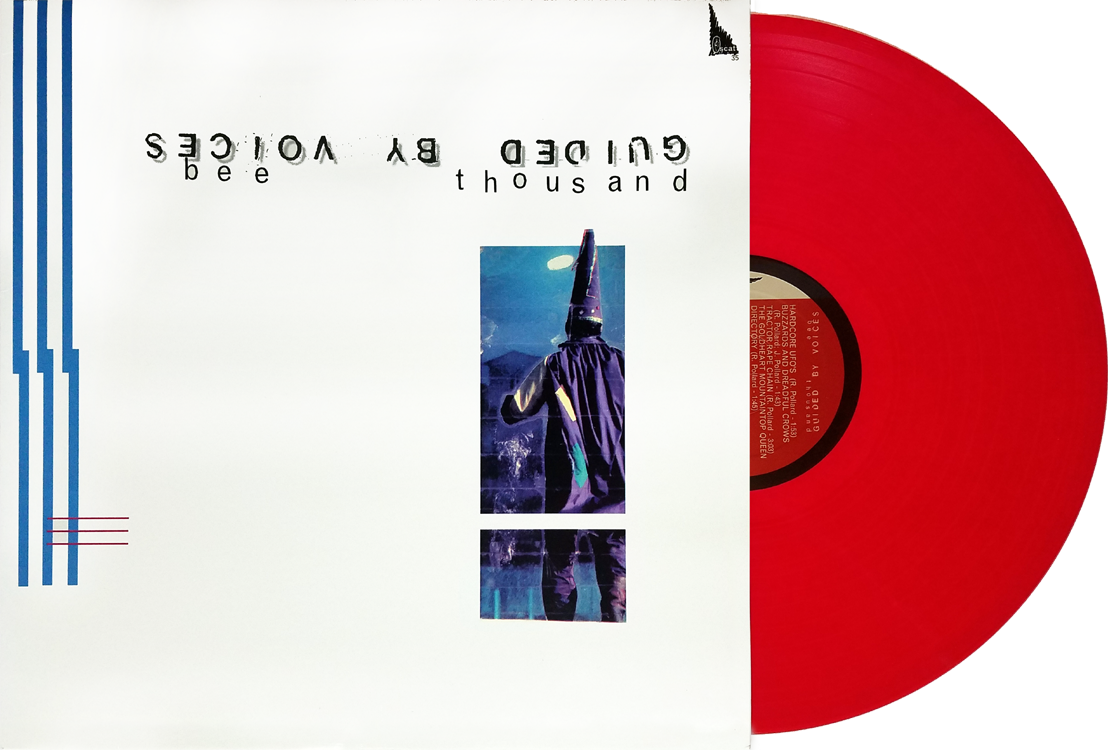
Album in Context: Guided By Voices, Bee Thousand (1994)

By Allesandro Rotondi

Guided By Voices sound like they were recorded in an ethereal garage. Through the barriers of muddy sound production and a demo mixtape atmosphere, Bee Thousand’s songs and melodies transcend far beyond any mere recording technicalities. For fans of the band, you already know this is part of their signature sound, and a huge factor in their magic.

Songs like “Demons Are Real” and “Awful Bliss” seem like mere sketches, but have a complexity and life to them that makes them feel complete and part of a larger picture. This album in itself, is a larger picture. Some songs bleed into each other, or abruptly clash together, while others are sewn together like a patterned quilt, albeit a sometimes unmatching, colourful, and haphazard one. Pollard perhaps describes their sound best, rooting their influences in the “four P’s of rock”: pop, punk rock, progressive rock, and psychedelia.

In total, the album makes up a remarkable thirty-six minutes, with twenty tracks. To put that into perspective, Drake’s Views released in 2016 was also twenty tracks, and ran at eighty-one looong minutes. Guided By Voices did it the right way: though they had a ton of little ditties that made up the album, they were never dragged out and never oversaturated the bigger picture.

In retrospective, Pollard and Co were crafting a conceptual lo-fi masterpiece that winter and spring of 1994. Many music lovers alike will agree that Bee Thousand was the peak of Guided By Voices’ late rise to fame. Even twenty five years later, this album defines what it means to be “indie.” In a modern music world where it’s easy to forget that indie means independent, Guided By Voices was exactly that. Robert Pollard did not need a big record company, a fancy studio, or a nationwide touring contract to be a respected artist. It was a success story that every musician dreams of—after you fear you have failed, the world suddenly wakes up adoring your music.

“Breathe” feat. Mandy Gonzalez (In the Heights OBC, 2005)

Musical theatre has a way of letting you see and hear the stories that aren’t always brought to attention. Like the songs about being the socially awkward friend at a party and you start to have a panic attack. The music and acting work in tandem to give the audience authentic moments that they can personally connect with.

This soundtrack— written none other than by Lin-Manuel Miranda—is so incredibly unique because it seamlessly juggles rap and multi-lingual phrases in a 2 hour production, while being targetted towards a younger demographic. Somehow it all just seems to work together beautifully, while still keeping crucial topics about poverty and gentrification in the forefront and integrating Latin sounding instrumentals to compliment such.

It’s a melodic monolgue from Nina who is struggling to find the words to tell her parents, and friends that she dropped out of Stanford. She worries they’ll hate her and will be dissappointed because she was the only person to actually “make it out” of the barrio.

The lines in this song are so authentic and really affect anyone who has ever felt an impeeding weight resting on their shoulders placed there by their own parents, because they set the bar so high (myself included). She starts off by singing, “Hey guys it’s me/ the biggest dissappointment you know…” she can’t keep standing on their pedestal and feels guilty about it. The barrio isn’t worried because they know their “star” will get out of this low place eventually. “Ay te adoro, te quiero/ the neighbourhood waved and said Nina, ‘be brave/ and you’re gonna be fine!'”

As hurtful as it is to listen to initially, it’s also comforting and hopeful to hear all of the voices wishing her encouragement and telling her to keep going. Nina realizes that she can always get back up and try again with pacienca y fe (patience and faith). At times when I feel overwhelmed, this is my mantra to help me push through.

So to anyone who needed to hear it today: Pacienca y fe… just breathe, and try again.

-Genna Dara

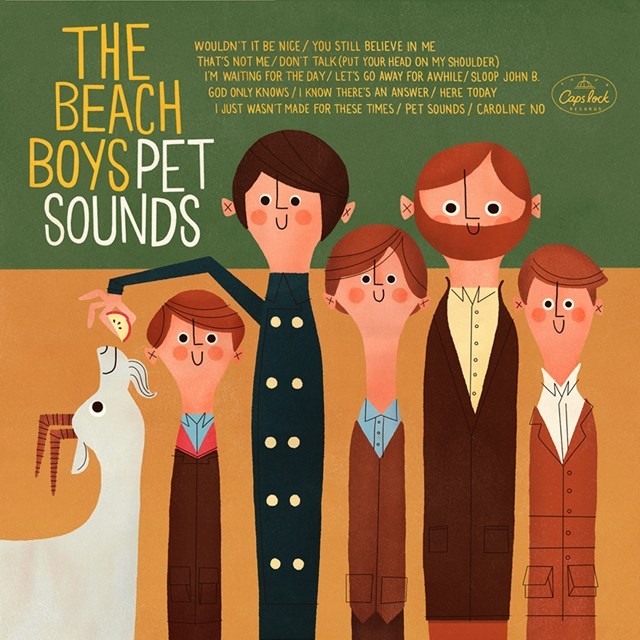
The Beach Boys, “God Only Knows” (Pet Sounds, 1966)

By Allesandro Rotondi

Illustration by Andrew Kolb

God Only Knows is one of the greatest songs ever written. It’s Paul McCartney’s self-proclaimed favourite song. I first heard it on The Wonder Years, at the end of the fabled episode where Kevin realizes the girl next door was gone forever. She drove away on a bus to summer camp, as Kevin stared into the distance with “God only knows what I’d be without you” chiming over and over again for what felt like an eternity.

Just last week it was featured in the new trailer for Toy Story 4, and much to the same effect, it left a profound impression on all those who watched it. I don’t know what it is about the song—something about it is just so beautiful and pure. And to think it starts with the lines “I may not always love you.” However, it continues with the lines “but long as there are stars above you / you never need to doubt it”, thus completing one of the greatest opening lines of any love song. Ever.

The song is actually ridiculously complex, functioning in two interchanging keys, with a bass line that moves in a chromatic stepwise motion using inversions of the root chord. That probably sounds like a whole lot of mumbo jumbo, and it is. The point is, Brian Wilson could do what most composers cannot. And that is, write a mindblowing-ly complex masterpiece of sonic art, or a “pocket symphony” as his compositions were sometimes labeled, and have most that hear it call it “beautiful in its simplicity.”

The end of the song alone would go down in history as a composer’s primal achievement. It is the perfect vocal round: Dozens of multi-layered voices singing the tagline of the song in interweaving and meandering harmony, only to fade out into infinity. I always picture that once the song has faded, the ending tagline is still looping into eternity somewhere. Thank you Brian Wilson, and thank you to all those who checked out Notes on Notes now, and in the ongoing future. God only knows what we’d be without you.

NSYNC, “Bye Bye Bye” (No Strings Attached, 2000)

by Chelsea Ives

With each year that passed bringing me closer to finishing my university degree, I began to feel older and more decrepit than I ever ought to feel. Every year it seemed each generation became less infatuated with the suave, seductive boy bands of my youth, and I became accustomed to the fact that millennial’s would never feel the same kind of love for the music and boy bands as I did when I was a pre-teen girl, freakishly hoarding burned CD’s scrawled on with black sharpie.

Such was true for my copy of NSYNC’s  2000 album No String’s Attached. I was particularly fond of “Bye Bye Bye,” the lead single from the album. Everyone knew the scandal of NSYNC’s legal battle with their manager Lou Pearlman and former record label, so as much as I was hoping the song meant JT and his then-girlfriend (Brittany Spears) had split, the song was speculated to be about the bands split from their former label.

The song features heavy kick and bass, and catchy lyrics which are impossible to get out of your head. Not to mention NSYNC stomping in unison to a dance that would become iconic with the ability to get your entire high school in a flash mob. NSYC’s lyrics spoke to the hearts of many: like puppets being played with, “(Bye bye) Don’t wanna be a fool for you / Just another player in your game for two”. “Bye Bye Bye” boasts a theme and beat that will never get tired.

I used to lament the fact that millennial’s would miss out on the best generations of music: with every year, and every new boy band hair flipping their way onto the music scene with less classy swagger and more haughty grins, I was increasingly aware of the distance between new age music and 90’s classic’s like NSYNC.

But that changed in 2018. Backstreet’s back, baby! With their single “Don’t Go Breaking My Heart,” it was only time before the other popular 90’s boy bands would reunite and follow suit.

And follow they did!

Just March 1st of 2019, New Kids on the Block released their first song in 11 years – even paying homage to “Bye Bye Bye,” in their music video by dangling by strings like marionettes.

NSYNC by today’s standards may not be the most attractive boy band there ever was, but in the 90’s they were every teenage girl’s daydream. And maybe we’ll be seeing more of them soon.