Album In Context – Weezer(Blue Album) 1994

By Anthony Trocchi

Weezer’s self titled “Blue Album” is considered by many fans to be some of the groups best work and perhaps a peak in their discorography. Weezer provided a sound and image that was refreshing to many rock fans in 1994, taking alt rock in a new direction that was quite different than other popular artists like nirvana and pearl jam had been taking it in. Weezer’s sound and image created an interesting fuse between the likes of punk and pop, for the heavy guitar riffs and punchy drums were accompanied by sad and sensitive lyrics often that had to do with childhood stories from Rivers Cuomo (lead singer). Weezer credits their producer Ric Ocasek, as someone who truly helped guide their sound in the direction the want. Ocasek helped produce “The Cars” first album and Weezer claims that what Ocasek did for The Cars he did for them, Rivers Cuomo even said “we were kinda like the cars of our generation”on Marc Maron’s podcast in 2015. This sound was curated primarily by the bands guitar riffs. With hair metal essentially just starting to die as Weezer entered the scene, the band found that they needed to focus more on vocal melodies instead of guitar harmonies like the rest of rock was currently doing. Although Weezer has its fair share of heavy guitar riffs, they still managed to stay unique through their vocals. While many found this new take on rock to be refreshing there was still certainly plenty of critical reception that disliked Weezer’s music.Many people viewed the band as “posers” and saw them as borrowing certain tricks and techniques from bands like Nirvana just so they could adapt onto the scene in a quick manner. However Weezer’s success was far from overnight, the band spent roughly 3 years prior ridning in clubs and bars cultivating their sound. This sound goes hand and hand with their image and it’s something that really has become unique to or at least associated with Weezer and I’ve heard it be referred to as before as “Nerd Rock”. Essentially what this refers to is how Weezer took the Nerd or Geek image and made it into something cool or to be admired. A lot of it comes from River’s vocals like on the track “Buddy Holly” where Rivers is sort of comparing himself to having similar looks to Buddy Holly, yet also sins about standing up for his girl in a physical altercation. The album cover itself is a good example of this “nerd rock” notion, inspired by “Four by the beach boys” Rivers liked the idea of just the four of them standing behind a blue screen. While the album cover is iconic now, at the time anyone buying the album must of surely thought to themselves “who are these dorky looking guys” and that’s exactly what the band was going for.

If there really is only one word that could describe Weezer’s blue album, it would be unique. It simply was such a fresh tasting album that was innovating ideas in music no one had before them. It’s not to say that Weezer started pop punk but they are definitely pioneers of the genre, and River’s lyrical tastes have changed what people identify as “cool”.
Album in Context – Oasis “Definitely Maybe” (1994)

By Michaela Maxey

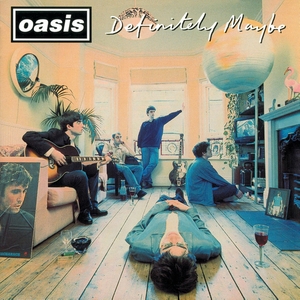
Oasis “Definitely Maybe” album cover

The year of 1994 was economically disastrous for the UK under Margaret Thatcher’s government. There was widespread strikes amongst the public sectors and unemployment had reached 3.2 million people. So how did two brothers from Burnage, a somewhat unremarkable area of Manchester, rise through all the struggles they saw around them? It wasn’t easy for Noel and Liam Gallagher, but they did manage to come together. Liam had originally been part of an earlier band called Rain with drummer Tony McCarroll and guitarist Paul Arthurs. Once Noel joined, the band name was changed to Oasis. In ‘94 the band released their debut album Definitely Maybe which became one of the most sold debut albums of the time, reaching as far as North America where it became just as popular.

In Definitely Maybe, Noel Gallagher brings forth honest and blatant statements, never shielding away from potential backlash. This is especially seen in songs like “Up in the Sky” and “Cigarettes and Alcohol” that constantly reference drugs. These songs are drastically different in their sounds, that is “Up in the Sky” offers a quick beat and drawn out lyrics while “Cigarettes and Alcohol” slows it down into something that sounds more like an ode to drugs. Although I don’t recommend doing anything suggested in these songs, I’m loving how badass they are and the ‘cool’ feeling I get listening to them. Tracks like “Rock ‘N’ Roll Star” and “Supersonic” offer a certain loudness to the album through their use of electric guitar and drums that mimic the loudness of society; if the noise of workers striking was ever captured, it would be in these songs. There is no quiet song until “Married with Children,” the final song on the album, plays. After crashing our way through the tracks, we get a certain quietness that feels like credits in a movie beginning to role and the audience sitting in awe of what they just witnessed.

Truly, this album is a masterpiece. It somehow combines the smugness of the Sex Pistols and the melodic tunes of Paul McCartney, constantly weaving between the two extremes and reflecting the instability that both the band and society were facing.

Album in Context – Jeff Buckley’s “Grace” (1994)

by Chelsea Ives

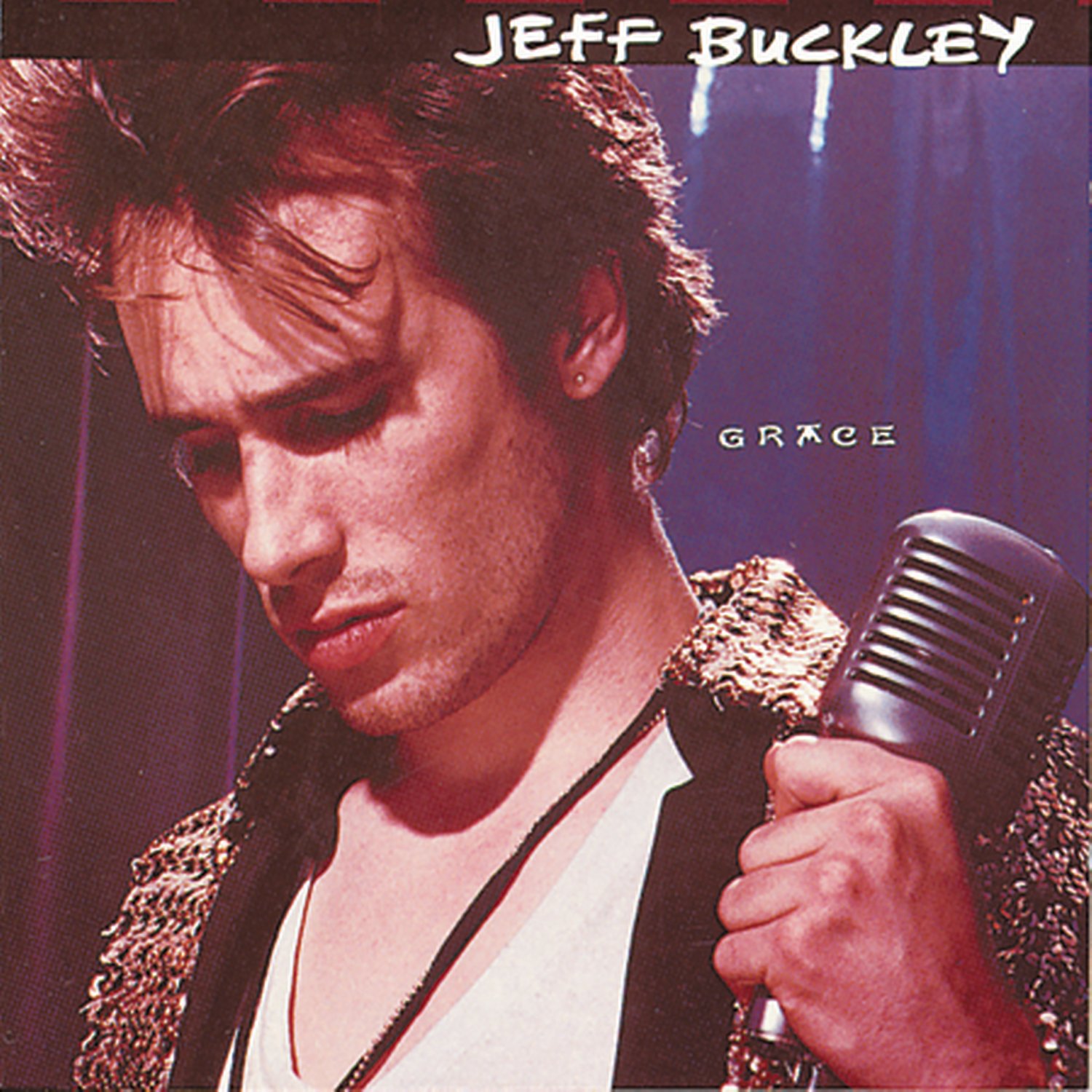
Amidst the insurgence of the pop-rock-grunge-alternative music scene, Jeff Buckley was the steadfast stone against the current that was the onslaught of popular punk-rock music. While Greenday released their first major studio album, Dookie, and ushered a new era of pop-culture music, Buckley instead chose to be the resistance. Combating the music scene which threatened to be homogenized into the new and growing sound of grunge-punk, Buckley flooded the music scene with his original folk-rock songs and re-vamped versions of classics like Led Zepplin’s, “Night Flight”.

The most important aspect Buckley brought to the table was his incredible voice. Somehow both ephemeral and tangible at once; Buckley’s voice truly is angelic, and I understand where the title of the album comes from. The album opens with his original song, “Mojo Pin,” which features Buckley’s voice breaking through silence in a haunting and sublime interference, as the song fades in so slowly it is almost imperceptible at first, before building with Buckley’s vocals.

Buckley had a huge impact on the music scene in New York in 1994. Where other musicians had tried to kick off their career by doing covers of songs that were (already) over-done, trying to play them in the exact same way; Buckley shone through the masses like a lighthouse. His renditions of the same songs were always vastly different and always stimulating. Take for example his cover of Leonard Cohen’s song, “Hallelujah”. Arguably a favourite to be covered by artists, all of them always sounding the same. Except of course, for Buckley’s version. Indeed, Buckley’s version of the song has come to be the most popular version of the song. Included as the sixth track on the Grace album, Buckley’s rendition of “Hallelujah,” could not be more different than Cohen’s. Where Cohen’s version is comprised of a heavy, jazzy-blues sound, Buckley turns “Hallelujah,” into a light, airy melody which truly gives the impression that he knows the secret chord.

Jeff Buckley’s album, Grace, is one that has stood the test of time, only becoming more popular since it’s release in 1994. Grace will continue to inspire for years to come.

Jeff Buckley’s only full length studio album, Grace. (August 23, 1994).

1994 Album in Context: Hole’s Live Through This

By Mina Wiebe

In typical Courtney Love fashion, Hole’s 1994 album Live Through This flipped the alt-rock genre on its head, gave it the finger, and contributed to a total shift in the alternative music scene. I’ve always thought of the 90’s as a decade of metamorphosis for alternative music, and the album played a crucial role in the transformation. In the late 80’s there was certainly a spike in alternative music, but it wasn’t until the 90’s that these bands really took off. Alternative music was suddenly this paradoxical butterfly, bursting from its underground cocoon to become the very thing its essence was built to juxtapose: it became mainstream.

In her Pitchfork review of Live Through This Sasha Geffen made a good point when she explained that “[w]hile there were plenty of rock songs written by men about hounding and abusing women, there were few about being hounded and abused. The rock canon, like all the others, fiercely guarded its male subjectivity, and Love wanted to break through its ranks”. That’s why I have the utmost respect for Hole—while many other male alt-bands began to be accepted for what they already were, Hole had to go through an entire metamorphosis of sound to have their alternative music accepted into the mainstream world. And when they did finally push their way in to this male-dominated music scene, somehow their work was still attributed to the work of a man.

And although 90’s alt-music is usually associated with names like Nirvana and Pearl Jam, Hole definitely made its mark. Live Through This didn’t reach Billboard’s top 40, but it still met critical acclaim, going multi-platinum and earning top-100 chart spots in seven countries. Hole had successfully gained a mainstream audience, sporting the ironic “alternative” label while gaining international recognition. Live Through This is a staple of the decade, and will forever be known as one of the albums that helped change the meaning of alternative.