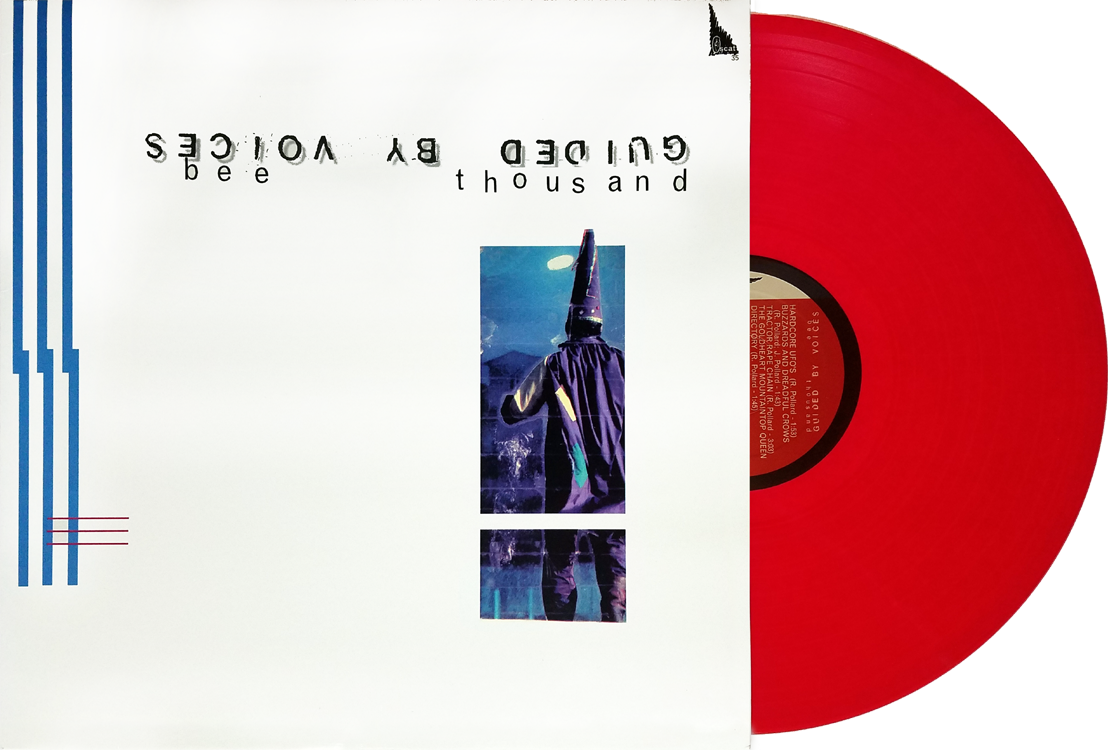
Guided By Voices sound like they were recorded in an ethereal garage. Through the barriers of muddy sound production and a demo mixtape atmosphere, Bee Thousand’s songs and melodies transcend far beyond any mere recording technicalities. For fans of the band, you already know this is part of their signature sound, and a huge factor in their magic.
Songs like “Demons Are Real” and “Awful Bliss” seem like mere sketches, but have a complexity and life to them that makes them feel complete and part of a larger picture. This album in itself, is a larger picture. Some songs bleed into each other, or abruptly clash together, while others are sewn together like a patterned quilt, albeit a sometimes unmatching, colourful, and haphazard one. Pollard perhaps describes their sound best, rooting their influences in the “four P’s of rock”: pop, punk rock, progressive rock, and psychedelia.
In total, the album makes up a remarkable thirty-six minutes, with twenty tracks. To put that into perspective, Drake’s Views released in 2016 was also twenty tracks, and ran at eighty-one looong minutes. Guided By Voices did it the right way: though they had a ton of little ditties that made up the album, they were never dragged out and never oversaturated the bigger picture.
In retrospective, Pollard and Co were crafting a conceptual lo-fi masterpiece that winter and spring of 1994. Many music lovers alike will agree that Bee Thousand was the peak of Guided By Voices’ late rise to fame. Even twenty five years later, this album defines what it means to be “indie.” In a modern music world where it’s easy to forget that indie means independent, Guided By Voices was exactly that. Robert Pollard did not need a big record company, a fancy studio, or a nationwide touring contract to be a respected artist. It was a success story that every musician dreams of—after you fear you have failed, the world suddenly wakes up adoring your music.
God Only Knows is one of the greatest songs ever written. It’s Paul McCartney’s self-proclaimed favourite song. I first heard it on The Wonder Years, at the end of the fabled episode where Kevin realizes the girl next door was gone forever. She drove away on a bus to summer camp, as Kevin stared into the distance with “God only knows what I’d be without you” chiming over and over again for what felt like an eternity.
Just last week it was featured in the new trailer for Toy Story 4, and much to the same effect, it left a profound impression on all those who watched it. I don’t know what it is about the song—something about it is just so beautiful and pure. And to think it starts with the lines “I may not always love you.” However, it continues with the lines “but long as there are stars above you / you never need to doubt it”, thus completing one of the greatest opening lines of any love song. Ever.
The song is actually ridiculously complex, functioning in two interchanging keys, with a bass line that moves in a chromatic stepwise motion using inversions of the root chord. That probably sounds like a whole lot of mumbo jumbo, and it is. The point is, Brian Wilson could do what most composers cannot. And that is, write a mindblowing-ly complex masterpiece of sonic art, or a “pocket symphony” as his compositions were sometimes labeled, and have most that hear it call it “beautiful in its simplicity.”
The end of the song alone would go down in history as a composer’s primal achievement. It is the perfect vocal round: Dozens of multi-layered voices singing the tagline of the song in interweaving and meandering harmony, only to fade out into infinity. I always picture that once the song has faded, the ending tagline is still looping into eternity somewhere. Thank you Brian Wilson, and thank you to all those who checked out Notes on Notes now, and in the ongoing future. God only knows what we’d be without you.
What is happening in the world of surf music right now? This is the first thought that came to my mind after reading about the death of legendary surf guitarist Dick Dale. He practically created the genre single-handedly, and remained true to his fiery guitar-picking roots until the end.
I wondered where surf music had led since 1961. The grit of the sound ended up in punk, like The Ramones. The fun beachlife ideology was adapted by Weezer. The wavy guitar sound ended up in lo-fi indie artists like Alvvays and Mac DeMarco. Then, I stumbled upon a Spotify playlist called Indie Surf Revival, and way down in the tracklist was Girl In Red (stylized girl in red). Girl In Red, a 20 year-old Norwegian singer/songwriter named Marie Ulven, is a singular force that is keeping the surf music ideology alive.
She writes, records and produces her music in her bedroom. Without the professional help of outside producers and professional recording studios, she is a true indie artist. Much like Ulven, surf music was born and raised in the household. Dick Dale, Jan Berry (of Jan & Dean), and The Beach Boys all cut their first records in a garage, thus helping launch the garage band scene, and some of the first home-recordings, which 21st century technology has now turned into a mainstream approach.
I wouldn’t necessarily call this a surf track, but it certainly embodies the ideals of the genre. Ulven has the sound: chunking strumming and meandering guitar tones, peppy drum beats, light and bouncy bass, and melodically swaying and carefree vocals. She also uses vocal doubling, which Brian Wilson helped pioneer in the early 60’s with vocal-surf.
Ulven has written possibly the greatest hook of the decade: “I need to be alone / or I’m gonna lose my shit.” It’s catchy, honest, and relatable, especially to the hip introvert culture that has rose to prominence in the 21st century. Ulven is a leader of this ideology, as she records music in the free kingdom of her own bedroom, and expresses her thoughts through music without worrying much about outside opinions.
“I Need To Be Alone” is an instant classic, and though we will miss Dick Dale, his soul can be heard in every guitar strum, every double-tracked handclap, and every crunchy snare hit on beats two and four, driving this musically feel-good, and thematically nostalgic introvert anthem forward.
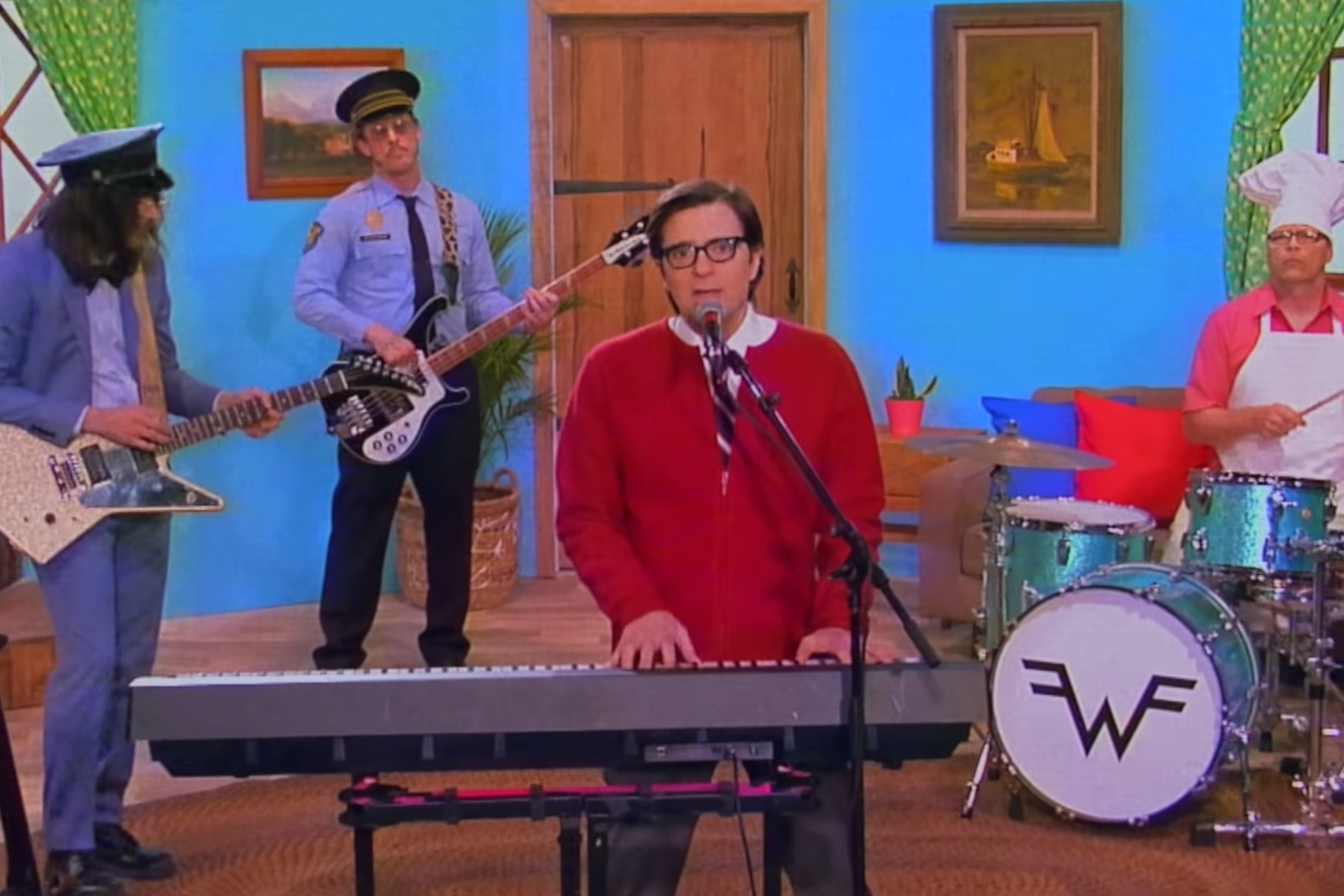
Honesty is a hard thing to come by these days. In the current political and social media climates, it’s hard to know who to believe, who to trust, and who’s actually telling the truth. For these reasons, Weezer’s “I’m Just Being Honest” is refreshing, relevant, and necessary. The song’s truth-telling scenarios are light, relatable, and deal with everyday happenings. Whether it’s telling a significant other what you think about their new haircut, or giving an honest opinion about a band’s new music, Rivers Cuomo & Co present it tastefully in an interesting and comedic way.
When asked about his opinion on his S.O.’s new haircut, Cuomo sings “I thought you looked better before,” before receiving the reply “Hope you like sleeping on the floor.” He also has the nerve to hilariously tell a new band looking for critique that they “sound like shit.” This line alone will likely make smaller artists think twice about handing their mixtape to Cuomo.
During the chorus, Cuomo states “I should have lied / Don’t get mad at me, I’m just being honest.” And that’s the fact of the matter: the truth hurts, and Weezer is here to give you the cold, hard truth.
Musically, the song is not particularly interesting. The upbeat drums drive the song, pushing forward without second thought, and representing the blatant and unfiltered brain of Cuomo. The chord progression is unchanging and repetitive, until the bridge. Luckily though, the vocal melody is diverse, and production techniques like vocal double-tracking and synth layering keep the choruses interesting, and varied from the thinner texture of the verses. The synthesizers and electronic drum beat during the choruses make the song feel sugar-coated and dancy, quite the opposite of the non-sugar-coated lyrics. But hey, maybe that’s what they were going for. After all—I’m just being honest.
“This Time Around” opens with a somber yet mystical chord cycle that encircles itself in the opening four bars. Jessica Pratt’s voice eases into the guitar strumming, like the songbird she sings about slowing its flight into a landing. Pratt sings softly to the major seventh chords that encompass the song and provide its reflective atmosphere. Pratt uses these chords effectively throughout the song, and it’s often considered one of the dreamiest chord qualities due to its open sounding interval construction. The major seventh chord contains the farthest interval of unique notes, before repeating the same note again as an octave, or perfect eighth. Because of this, the sound is always reaching up, and never quite arriving. This is the reason for the reflective and longing nature of the chord, and likely the reason Pratt made it the primary chord choice on her palette of desired sounds.
Pratt’s major seventh chord strumming repeatedly spins like a merry-go-round, encircling itself in a seemingly endless way. That is, until the resolution that presents itself in the chorus. The chorus hits hard, as she inverts the chord progression of the verses backwards, and resolves beautifully into another major seventh chord in the root of the home key. Pratt sings “I don’t wanna find that I’ve been in marching under the crueler side of the fight”, answering the reflective music with a lyrical theme of reaching for conclusions. But more specifically, it’s Pratt’s apprehensions as to whether or not she’s prepared to hear them. This song hits home for obvious reasons—no one is ever prepared for less than ideal but inevitable conclusions to life’s many challenges. Much like Pratt, it makes me want to cry. This time around, we have a chance to avoid them again, or face them. After all, there are only so many times around in life.
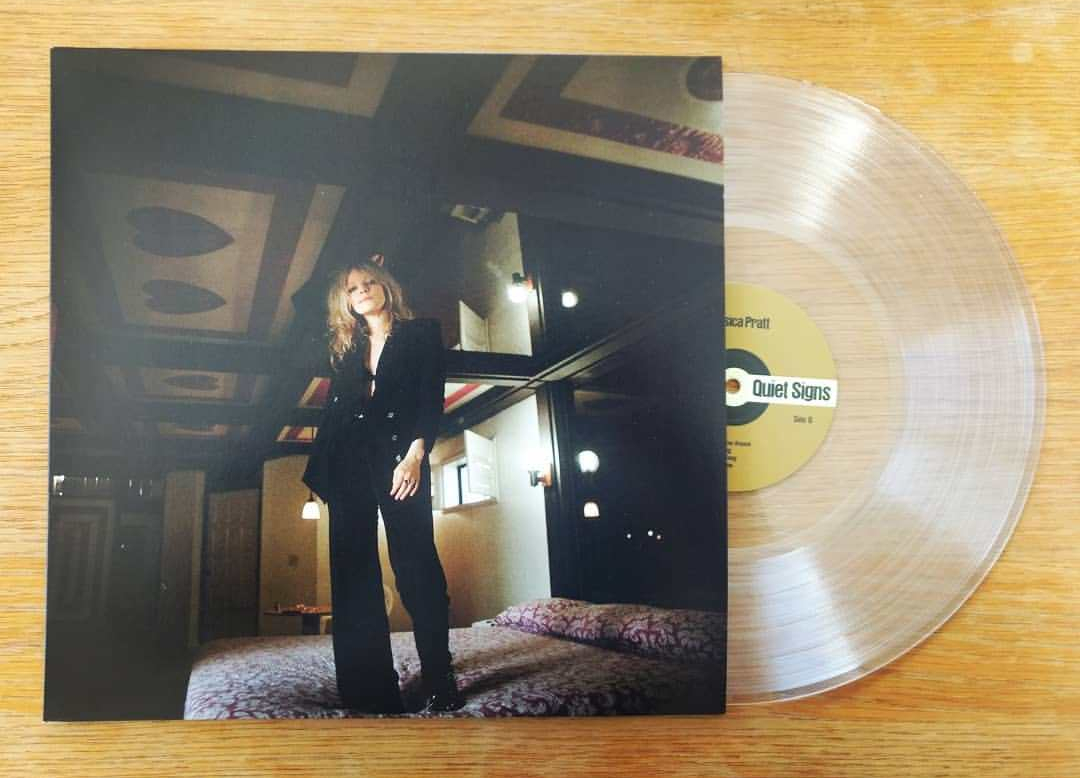
Jessica Pratt has one of the most unique singing voices I’ve ever heard. Quiet Signs is her third album effort, and running at 27 minutes, it is a brief but welcoming glimpse into the philosophical mind of an enigmatic soul. She comes off as delicate and raw, but well-informed about everything she sings about. Pratt’s music is like an all-seeing eye on the world, peeking around every corner and offering insight about what it has seen. Her sound embodies modern folk, even though she doesn’t like the idea of being pinned to any genre. There is no pinning here, however—Quiet Signs is a folk adventure with melded elements of psychedelia and electronic music. What’s brilliant about her, is the way she builds a track upon these styles, with the minimal amount of instruments. In “Fare Thee Well,” Pratt’s bedtrack is straight comping acoustic guitar, with lead vocal and light backing vocals on the upper harmony. But built upon that foundation, however, is a single-note organ, mellotron staccato (or, quickly struck) chords, and at the end, a crooning flute part. These elements are what sets the mood for Pratt’s thinly textured, but aesthetically rich sound throughout the whole album.
Pratt and her producer Al Carlson clearly know how to create an atmosphere that perfectly suits the desires of her music. Upon first listen, I thought her voice was tampered with in post production to give it that wistfully light tone, and the unique style in which she melds words together when she sings. I figured she had sped the tape down, recorded her vocals, and then sped it back to normal speed to pitch her voice up with it. This was especially true after hearing her speaking voice on a KEXP performance, which I thought was surprisingly different than her singing voice. But alas, that is her real voice, and a beautiful one at that. Her light vocals sway, climb, and fall, with the innocence of a young child, and the consoling wisdom of a grandmother. The album’s weightless feeling is largely attributed to there being no bass or bottom end instruments at any point, besides the piano on “Opening Night” and “Crossing.” Her guitar playing crackles like feet on top of autumn leaves, like her almost fizzling strumming on “Here My Love.”
Much more than on her previous two albums, Pratt employs artificial (or perhaps, authentic) tape hiss and reverb to her instruments and vocals, greatly influencing the breezy, and open-chambered feeling that this album possesses. It’s almost as though without your full attention, the music and contour could simply drift away with the wind. Her guitar has a chorus effect on it during many of the tracks, which slightly detunes the sound of the guitar with itself, giving it an electromagnetic wavy feel, reminiscent of a Mac DeMarco record. Pratt’s instrumental palette also consists of woodwinds like lilting flutes, synthesizers like mellotron and organ, synthesized orchestral strings, piano, tambourine, and reverb-drenched vocals and guitar to top it off. Pratt tastefully picks which instruments will best suit the song, and never has more than three or four accompanying her vocals at a time. Her chord choices favour major and minor sevenths, likely the most open sounding and dreamy chord choices any folk guitarist could desire. This is especially true on “Poly Blue,” one of the catchiest and most heartfelt tunes on the album, with melodies and hooks that are likely to follow you everywhere you go. The songs’ keys are more often major than minor, but her chord choices often allude to minor, and the musical expressions profess an often somber feeling. As a songwriter, it’s a difficult task to make a major keyed song sound minor, and vice versa, like Pratt does on “Silent Song.”
This is her first album recorded outside of her home and in an authentic studio, and it also sounds the least like it. More than previously, Pratt’s production style feels like lo-fi, analog, underground folk. However, it’s clearly intentional, and Pratt has learned a thing or two over the years about how to set her words, chords, and melodies, into an atmosphere that provides the most comfortable walls for them to live within. Though Pratt has a wide range of influences, like 1970’s Marianne Faithfull and John Martyn, her musical execution personally reminds me of Paul Simon’s Songbook album, or something K.K. Slider would sing in the coffeeshops of the Animal Crossing game series. Her music also wouldn’t be out of place in the season two soundtrack of The End of the F***ing World (your move, Netflix).
Though Pratt hails from Los Angeles, her music is less reflective of California’s sunny ideals, as so often portrayed by pop culture, and sounds more like Pratt singing around a campfire after sunset, as the wind lightly blows the pacific ocean waves onto the darkened sandy shores. A quiet reflection, almost. I feel comforted by her music, in a melancholic way that is difficult to pinpoint. Pratt addresses issues and hardships that one has to face in their lifetime, but in doing so, assures the listener that when it’s all said in done, everything will be okay. In “Poly Blue,” Pratt sings “Please understand the changes that a boy has had to climb / For what in time, leaves him always late to fly,” assuring the listener that though the subject’s metaphorical flight is delayed, he still flies nonetheless. She made me feel better about things I wasn’t actually concerned about before I heard the record, but left me with the sensation of new experiences and adventures. I feel a little bit more out of my shell after having listened to Quiet Signs. My introduction to Jessica Pratt’s music has been a pleasant one, and like a new friend that pulls your arm onward to new adventures and places, I can’t wait to see what happens next.
Les Claypool and Sean Lennon are an odd, yet somehow fitting pair. A delirium, you could even say. “Amethyst Realm” is our latest dose of The Claypool Lennon Delirium, and the first of 2019. It was released on Valentine’s Day, but it’s no love song. Well, at least not your typical love song. Speaking of other things that this song is not, it’s also not a radio single. Running at 7 minutes 47 seconds, it is clear that Claypool and Lennon had no intentions to please the Top 40 charts, or garner any radioplay whatsoever. After all, who needs the radio when online streaming is quickly taking over all prior listening platforms, except maybe for vinyl.
What this song is, is a weird amalgamation of grimey alternative rock and gritty bass lines (courtesy of Claypool), and light experimentation and psychedelia (courtesy of Lennon). I expect nothing less of Sean Lennon, being the son of the late John Lennon and wife Yoko Ono. His voice is Lennon-esque, with his own twist, and his musical style is a distant relative of Ono’s avant-garde experimentation. I almost want to describe it as Yoko Ono-light. The drums, bass, and guitar are quite complex at times, with tasty drum fills and guitar trills, and Claypool’s riffing bass lines that sound like Primus bass lines thrown into a new environment. It sounds progressive to a degree, like something off an early Yes album, or even Rush and King Crimson. The song is easy to let fall into the background of your conscience, seeming to sit better as a backing mood-atmosphere work, than a piece meant for forefront focus. The sound effects, and use of grand reverbs throughout the piece give it a spacey vibe. This works quite well, considering the single’s cover shows some creepy looking termite reading a compass, likely attempting to navigate a foreign planet with red skies. This cover appears to be the one of their forthcoming album, titled South of Reality. The music indeed reflects that title, and it’s refreshing to hear two successful artists going against the grain of pop expectations, to make something strange and insect-like to infest the expectations of the “glamorous” and “spotless” music industry. Get ready to call pest control, Maroon 5 and Imagine Dragons.
The Windsor Symphony Orchestra is one of the longest running and most profound forces in the local music scene. Since its initial conception in 1947, the WSO has kept classical alive, strengthened rock and roll, and facilitated pop music. They have also been strong supporters of student education, the importance of the arts, and collaboration with other musicians in the area, including the University Singers student choir that I’m a member of.
This evening was a collaboration with Jeans N’ Classics, a GTA-based group that joins the WSO for tribute concerts to great pop/rock artists. The band includes a guitarist, keyboardist, bassist, drummer, and two lead and two backing vocalists. The band fronts the stage, with the orchestra assembling around them in a half circle, as the conductor stands elevated in the center. The show was held at The Chrysler Theatre, and with a seating capacity of 1200, it was clear this was nearly a sold-out show. This was likely due to the billing of the concert, titled “Bowie vs. Prince,” but due to legal complications with Prince’s estate, the bill was changed to “Bowie Got Soul.” The show must go on.
The concert featured the music of David Bowie sung by Jean Meilleur, and an assortment of other soulful artists like Earth, Wind & Fire, Gnarls Barkley, The Spinners and The O’Jays, all sung by Gavin Hope. The Bowie songs were well received by the audience, as expected. The audience was a combination of youngsters and not-so-youngsters, some from Bowie’s era, some from before, and some like me who were too young to even remember Bowie’s late electronic period. As Gavin Hope walked out wagging his purple tie in the air, the audience laughed and applauded, and a group of ladies shouted “We want ‘Purple Rain!’” Gavin began to sing “Purple tie, purple tie” to the tune of “Purple Rain,” and quickly halted after receiving a look of impending doom from the conductor. The audience understood, and Gavin joked that the WSO’s legal teams could not match those of Prince. The ensemble brought the soul tunes to life, and the audience had redeemed their purple-clad expectations before long.
The mood was very different between the Bowie and soul sets. During Bowie, the audience was reflective and reminiscing, often swaying back and forth and smiling as they grabbed fond memories out of the air and tied them back to the music gracing their ears. Everyone was happy, but it was bittersweet for those who still have an ache in their heart over Bowie’s sudden, unexpected death in 2016. When the soul music hit, the atmosphere changed instantly. Feet began tapping, fingers began snapping and clapping, and people jumped out of their seat to dance in the aisles, much to the chuckles of others who were too scared to do so. It was vibrant, uptempo, and groovy.
The WSO has a knack for fitting into any musical situation. Just last week my choir was with them for Beethoven and Verdi masterworks, and next week will be Mozart’s Requiem. Tonight, they back a rock band, and provide a foundation of beautiful orchestral layering that the band builds off of. And the sound is perfect: condenser microphones capture the sound of the orchestra, and is mixed in perfect dynamic level to the band. My only point of concern was that the backing vocalists could not be heard clearly at times, and the same occasionally happened to the lead vocalists. But for the amount of musicians onstage (about fifty), the sound was immaculate. Mixing a band of eight is a daunting task, let alone an entire symphony on top of that. It also speaks to the musicianship of the orchestra members who sit in the pocket perfectly with the blend of the band. All around, the musicianship, stage production, and songs were wonderful and classy, and it was an entertaining evening of fabulous music.
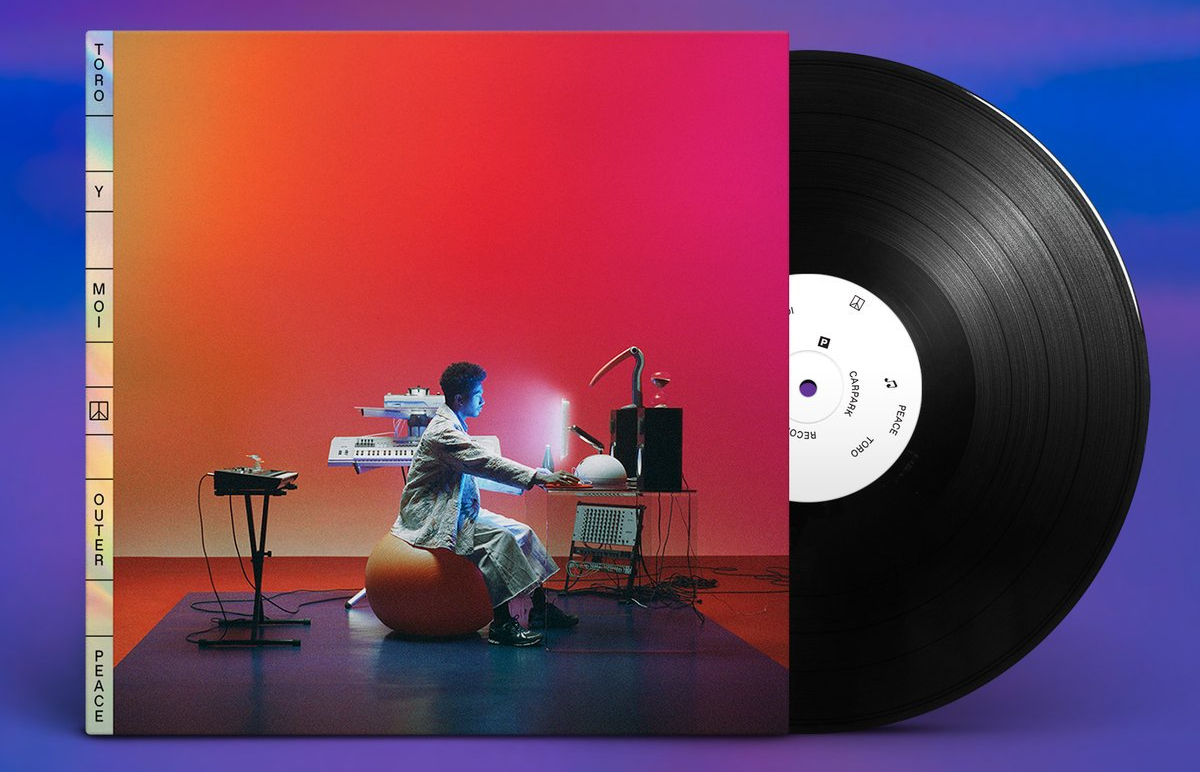
Listen in as Notes on Notes’ writers Danielle, Mina, Allesandro, Anthony, and Genna gather ’round the table to discuss Toro y Moi’s new album, Outer Peace!
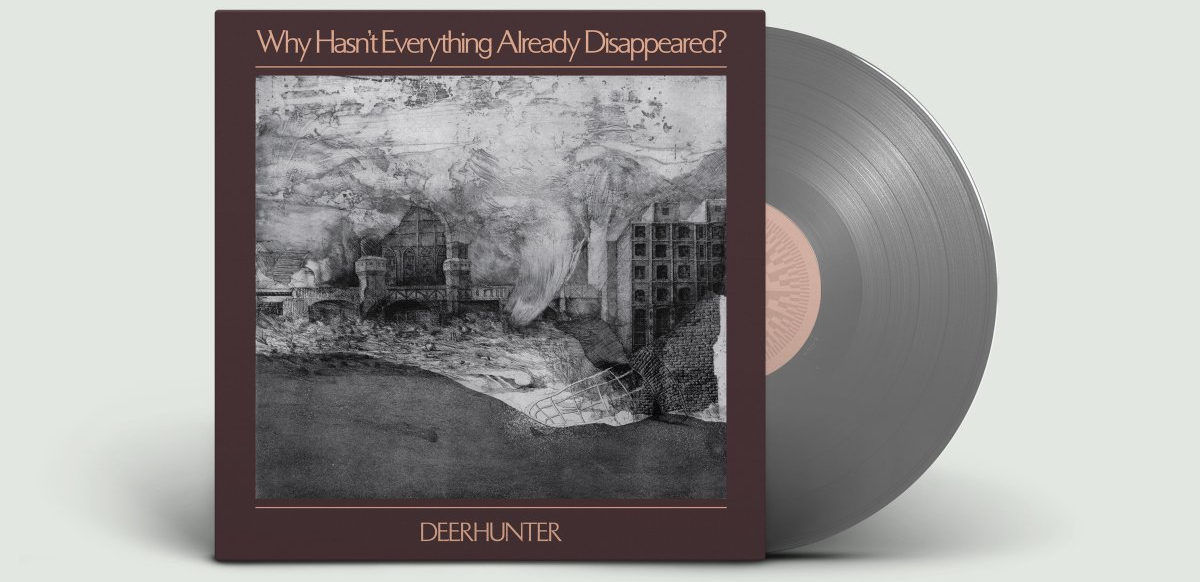
Listen in as Notes on Notes’ writers Danielle, Mina, Allesandro, Anthony, and Julia gather ’round the table to discuss Deerhunters’s new album, Why Hasn’t Everything Already Disappeared!






 Notes on Notes