What is happening in the world of surf music right now? This is the first thought that came to my mind after reading about the death of legendary surf guitarist Dick Dale. He practically created the genre single-handedly, and remained true to his fiery guitar-picking roots until the end.
I wondered where surf music had led since 1961. The grit of the sound ended up in punk, like The Ramones. The fun beachlife ideology was adapted by Weezer. The wavy guitar sound ended up in lo-fi indie artists like Alvvays and Mac DeMarco. Then, I stumbled upon a Spotify playlist called Indie Surf Revival, and way down in the tracklist was Girl In Red (stylized girl in red). Girl In Red, a 20 year-old Norwegian singer/songwriter named Marie Ulven, is a singular force that is keeping the surf music ideology alive.
She writes, records and produces her music in her bedroom. Without the professional help of outside producers and professional recording studios, she is a true indie artist. Much like Ulven, surf music was born and raised in the household. Dick Dale, Jan Berry (of Jan & Dean), and The Beach Boys all cut their first records in a garage, thus helping launch the garage band scene, and some of the first home-recordings, which 21st century technology has now turned into a mainstream approach.
I wouldn’t necessarily call this a surf track, but it certainly embodies the ideals of the genre. Ulven has the sound: chunking strumming and meandering guitar tones, peppy drum beats, light and bouncy bass, and melodically swaying and carefree vocals. She also uses vocal doubling, which Brian Wilson helped pioneer in the early 60’s with vocal-surf.
Ulven has written possibly the greatest hook of the decade: “I need to be alone / or I’m gonna lose my shit.” It’s catchy, honest, and relatable, especially to the hip introvert culture that has rose to prominence in the 21st century. Ulven is a leader of this ideology, as she records music in the free kingdom of her own bedroom, and expresses her thoughts through music without worrying much about outside opinions.
“I Need To Be Alone” is an instant classic, and though we will miss Dick Dale, his soul can be heard in every guitar strum, every double-tracked handclap, and every crunchy snare hit on beats two and four, driving this musically feel-good, and thematically nostalgic introvert anthem forward.
Carly Rae Jepsen is a name which has recently resurfaced, and it immediately triggers flashbacks of sweaty, sticky high school dances and nervous smiles shared across a dance floor. With her previous album released in 2015, the “Call Me Maybe” singer recently released her newest single, “Now That I Found You” for her forthcoming album due in 2019.
The Canadian singer/songwriter has created a lovely story in her song, “Now that I Found you”. If you watch the music video released with the song, the lyrics, “now that I’ve found you” take on a whole new level of meaning. A sweet story of an adopted kitten and the love between a pet-mom and pet – it’s the love story we never knew we wanted, but that we definitely needed. The song tells a story that anyone can relate to – about finding a new love yes, but also if you’ve adopted a pet before, you surely know the feeling. Jepsen said in an interview with Pitchfork:
“‘Now That I Found
You’ is about the high you get when a new love starts to change your life. It’s
like the rush, rush, rush is better than any drug.’”
The theme is clear from the lyrics of the song, “Thought it was impossible / It’s just like a miracle,” a universal emotion, a thought everyone has had once in their life – that you would never find love again, but lo and behold! The next love suddenly appears, and with the cutest marmalade kitten in his arms, no less. The lyrics and instrumentation of the song make it a pure radio-pop hit. Jepsen’s sound is a mix of Taylor Swift (Reputation era) and Katy Perry (“Last Friday Night”). The song holds themes of love, but in an up-beat pop ballad begging to get your head boppin’.
Carly Rae Jepsen’s newest single, “Now That I Found You,” part of her 2019 album which is set to be released in 2019.
Sitting in a small Leddy Library study room at the University of Windsor, our little trio of interviewers waited anxiously for Tara Watts to arrive. In the hopes of making a good impression, we set up our audio equipment and laid out an offering of cookies and coffee, appealing to that innate love for Tim Hortons that all Canadians share. After pumping ourselves up with a little caffeine, we finally received a message that Watts had arrived at the building. It was time to begin.
Leading her up to our little rented room, we showed Watts in and sat for a few minutes, getting comfortable with each other. Warm and friendly, Watts quickly entered conversation with familiar ease, like we were friends catching up after being apart for months. It was no surprise that a seasoned musician like her was so comfortable speaking with us about herself and her art.
To start, we wanted to cover the basics when interviewing Ms. Watts. But when we asked her why she decided to become a musician, the answer we received was unexpected, yet honest. The Windsor-grown, folk-rock artist astounded our interviewers when she matter-of-factly responded: “Boys.”
“I can’t believe I’m admitting this; I’ve never admitted this before”, she said with a laugh, before disclosing her more serious answer: having been raised on music. Like many musicians and artists who grow to have a passion for sound, Watts explained how she grew up in a musical environment, whether it was with her parents constantly playing music in the background, or singing hymns at church and youth group. She cites her mother as a big musical inspiration — introducing her to the symphony orchestra, her Celtic roots, and always having music on in the house when she was growing up. Music was a significant aspect of her life from a young age, so the seed was planted early on.
But it didn’t stop there; a teenage Watts learned to combine her journaling with a newfound love of guitar. Living across the street from a guitarist proved good exposure for her, as her neighbour encouraged Watts to sing and play simultaneously. Singing in her own made-up language as she learned to strum chords, Watts wrote her first song this way. Suddenly, things seemed to click into place as she realized her talent and passion for songwriting. Inspired by topics such as nature and the questioning of her faith — which she refers to as “some of this religious B.S.” in our interview—Watts began to speak her mind and put her thoughts and feelings out into the world.
And for over fifteen years, she has done exactly that.
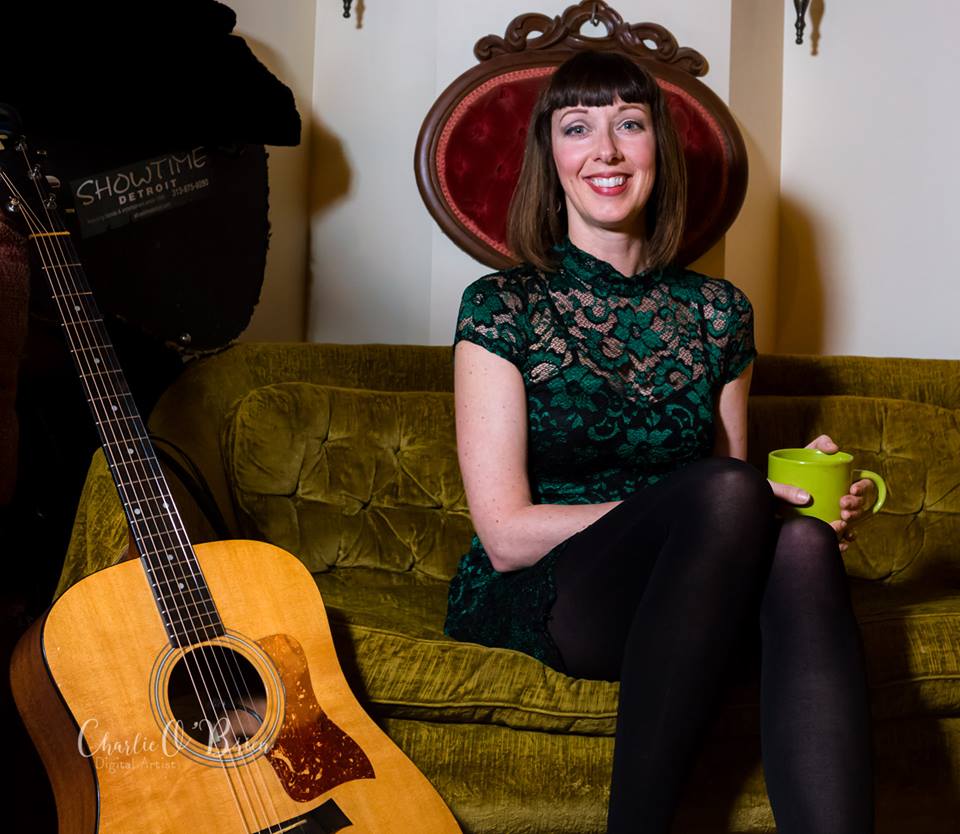
Photo courtesy of Charlie O’Brien.
Taking the Windsor music scene by storm, she’s managed to make her mark with gorgeous song lyrics and a voice both haunting and angelic. She’s performed all across Windsor as a solo artist, and with bands like The Locusts Have No King, Years of Ernest, and a trio with Kelly Hoppe and Ron Leary. She’s won the award for “Best Female Original Artist” by Windsor Independent Magazine four years in a row, which is huge for the Windsor music scene. Windsor hosts some of the most talented musicians in a variety of genres, yet not all are recognized for their talent. Many local artists agree that the Windsor music scene can be difficult to get into, but once you’re welcomed in, you are embraced by the most loving crowd. Watts described the Windsor music scene as gritty, but with an unmistakable charm that always leaves you wanting more.
The Windsor music scene isn’t the only thing that’s impacted Watts’ unique sound. Despite being a Windsor-grown city gal, her love of nature has influenced her music tremendously. In our interview, she explains how despite growing up in the highly automotive-based city, her parents taught her to appreciate nature—even if it was a small flower sprouting from the cracks in a sidewalk. The first song she ever wrote was actually composed during a trip North as a young girl, and her spiritual-like connection to the serenity and beauty of nature has since continued to inspire both the tone and lyrics of her music. “I love the earth. […] For me, I feel like nature is my church—like, I don’t do church anymore, […] but I feel like nature speaks to me. I find [it] healing.”
Her love of travelling has brought her all over the world, and she recounted her favourite performance moment for us. Travelling with a church group in her early 20’s, Watts performed for over 2,000 people at a concert in Thailand. Her and her church group travelled all over Thailand before returning back to Canada. More recently, she travelled to the Northwest Territories in 2017, following a boy again, using the time there to write and create new music.
Her many venture around the world have influenced some of the songs on her 2014 album “Pale Blue Moon”, which is brimming with gorgeous natural imagery. Lyrically, the album takes you away from the city’s sirens and harsh lights, whether it be on a mountainside like in her song “Hello Sun” or to the edge of a cliff overlooking trees and a river in “Barren Trees”. Her spiritual connection to the natural world is mirrored through the stunning simplicity of her folk sound, and she pairs the lyrical landscapes she creates with the simple yet enchanting layering of acoustic instruments to transport you to the places she’s travelled. The genuine pain and sincerity you can hear in her vocals makes you realize how important nature is to her—important as an escape from the hustle and bustle of the Windsor city, and at times, an important way to heal. And in 2016, healing was a necessity for the singer.
Watts’ life stopped completely after a tragic biking accident in 2016. Her perspective on music and life changed completely. In a CBC interview, Watts states that she now has a “new appreciation on life and [on her] days and time.” She was no longer rushing to create music, but now she slowly takes her time in the writing process. Her bike accident resulted in a traumatic brain injury where she suffered a concussion. In our interview, Watts made the point that her poor condition restricted even her ability to produce music. She had trouble keeping tempo and physically struggled to play the guitar, and it pained her to even listen to music. As horrible as it was, it can be seen as a “blessing in disguise”, since it allowed her to be reflective on her life, and see things from a different perspective. Her condition forced her to take care of herself as she could no longer work crazy hours with little to no sleep. It also affected her as a musician since she was more selective on where and when she will play music. Her new appreciation for life also pervaded her writing style. Watts suggested that her songwriting has only become stronger since her accident because it forced her to pace herself and carefully design each song with a more careful eye. In interviews previously, Watts would say that she used music as therapy and would write “in the depths of (her) despair” while now her music focuses on reflecting on all the beauty in life and being able to cherish it.
We were taken away by Watts’ perspective and asked how she kept positive. “You know what,” she remarked, “it’s the Windsor [music] scene that reminded me that I’m loved and supported. It was really overwhelming how much love I experienced. It is a hard scene, but when stuff gets real that’s where you see the heart of the city.”
And that’s exactly what happened. Summer 2016 saw the true love and charm of Windsor locals, musicians or not, as they band together to raise funds for Watts’ recovery, hosting a successful collaborative concert at Windsor Beer Exchange, and creating a GoFundMe page that surpassed its $5000 goal within 24 hours. The closeness of the tight-knit Windsor music community was shown in this moment, as was the love that locals had for Watts and her music.
No matter what you listen to, you can find traces of it in her. Whether it’s acoustic guitar in hand, or electric hollowbody, she blends in like a musical chameleon. From old-time country to folk, or pop-genre film soundtracks to Celtic roots, Watts has something for everyone. Speaking of which—friends and fans alike can expect something new from her in the coming future.
In an industrial city like Windsor, and the little brother of Detroit’s automotive industry, it is easy to forget that naturesque beauty is only a stone’s throw away. In the local scene, Watts is a constant reminder of this. She is many things; a flower blooming from the cracks of a sidewalk, or the first buds sprouting after a cold winter. But perhaps most of all:
There is little to imagine in Florida Georgia Line’s collab with Jason Derulo in “Women” as it works as an ode/tribute to their female counterpart. FGL sticks to their roots in their classic slow country beat and Jason Derulo offers his beautiful voice and varying pitch range to the track. Lyrics like, “We’re all better off with ‘em” and “Wanna thank you/ For everything, everything you do” can make any person get behind the message and overall sound of this song.
The fact that I’m so happy that there’s a song that offers thanks to women also upsets me in a way I didn’t think it would. It makes me realize that a lot of the time women are underappreciated and underrepresented in society. In my home country of Canada, it is no secret that gender inequality still exists today.
According to Statistics Canada: – Women have retained a disproportionate share of housework, childcare and eldercare. Combining earning and caring roles is very challenging, and one of these roles often has to make a sacrifice. More often than not, this results in women working less hours so that they have more time for their families. – Women are more vulnerable to lower income than men. One reason is that women are paid less than men even when they have the same qualifications and work the same number of hours; Women typically earn $0.87 for every $1.00 earned by men. – Young women and girls under 25 years old continued to have the highest rates of police-reported sexual assault in 2016 and 2017. They account for over half of victims before and after #MeToo (from 55% to 56%).
So thank you FGL and Jason Derulo for giving us a song like this one that brings the focus to women. Although the song is not revolutionary in its sound, it’s definitely a song that everyone should listen to as we often forget just how much women do for those they love while suffering gender inequality throughout the globe.
If you’re interested in visiting the pages I found my facts, you can look here and here.
For more information involving gender inequality in Canada and what you can do to help, visit The Canadian Women’s Foundation.
On first listen, there’s not really anything revolutionary about Boogie’s new track “Rainy Days”, but its catchiness pulls you in. The first time I heard it I was in the back of my friend’s car after a night of drinking, and I don’t know if it was the booze or the song itself, but my initial impression of the track was that of indifference. The words “bitches” and “hoes” filled my ears, and almost instinctively, I ignored the lyrics and focused on the beat. I don’t know about you, but when I hear lyrics like “I cheat on my queen for a hoe” and “[b]itch, I’m thirsty and blessed”, I sort of assume that the lyrics aren’t going to be anything worth paying attention to. But when you look past the sexist undertones, there’s actually some unexpected substance.
The melancholic chorus tell you exactly what the song is
about: “I’ve been thuggin’ through my rainy days for days”. Boogie proceeds to
rap about about his past rainy days, how he came from “a place where the shit
can get shady” and how his chances were slim. Although it’s not uncommon for
rappers to write lyrics about their past struggles, there’s a reason they
continue to do so: everyone loves an underdog who comes out on top, and that’s
exactly what Boogie does with this song.
Then Eminem comes in, rapping about his own past struggles that he’s had to overcome. “I left my legacy hurt? Fuckin’ absurd” he raps, with his usual anger-filled tone. Like Boogie, Eminem has had his fair share of past struggles, particularly with facing vast amounts of criticism for his often controversial lyrics. Both artists use the lyrics as a way to vent and show people that despite the hardships they’ve faced, they’ve still managed to come out on top. Again, there’s nothing revolutionary about this, but there’s something satisfying about the success of an underdog. Some may say the song is a boastful display of arrogance, but I’d say it’s two people who have worked their asses off and are rightfully proud of overcoming their rainy days.
Lead singer Andy Black from the metal/rock band Black veil Brides just released his 2nd solo album titled “The Ghost of Ohio”. The title track that holds the same name reveals his haunted history located in his hometown Ohio. As Andy mentioned the purpose of this concept album was to act as a soundtrack for his latest comic book. He mentions in Alternative press that “the focus was to do songs that felt like they represented, in terms of tone, the different emotions of the story.”At first listen I was surprised by the electronic and upbeat sound, since it contrast heavily to the melancholy Gothic songs I was used to listening.
The song uses minimal instrumentation throughout verses that allows you to focus on the story being told. Although, he was looked down upon fans for using auto tune, I believe it was done creatively to create a ghostly sound. The auto tune created echos which gave that haunting aura. His reflective vocals sound as if he is talking to himself, and his echoed voice comes back to haunt him. The echos in his vocals emphasize the haunting concept. As well, the repeated lyric “I am the ghost of Ohio” reflects back past childhood anxieties and obsessions. He constantly assures his listeners that he indeed the ghost looking back into his mentally fearful past.
This song expresses the idea of not feeling like you belong in your hometown, but yet it’s apart of you that you can’t escape. The beauty of this song is that it can connect to those who feel out of place in their roots. The tone of this song seems cheerful despite its melancholy lyrics, and this emotion of feeling confused is exactly what Andy wants to show. Sometimes we don’t know where we belong, but we can’t escape the haunting memories that stay in our hometown.
Death is something that if you’ve ever had the misfortune of experiencing, it can be unexpected and it is final. Dealing with it isnt much better– grief can be slow and painful and takes some time for your heart and mind to heal from the loss of a loved one.
Louis Tomlinson has taken his time and is now writing this song, two years after his mother had passed away from leukemia. Instead of the song being a heart-wrenching ballad, which the song does come across as at first listen, he makes the song powerful, beautiful and hopeful. The more you listen to it and its lyrics, the less sad and more optimistic you feel.
In an interview with the artist, he came out to speak about the song, about why it was time to finally write it and why his mom was such an important person in his life, the strength he found in himself because of his mom’s love for him and vice versa.
It feels really liberating. … just had to bite the bullet and f***ing do it. I knew I needed to write this song, but I was a bit scared of it. I’m not at the stage in my grief where I’m going to open the first verse and burst into tears … I don’t want people to get caught up in the sadness of it, the song should be hopeful.
Something that was done really nicely with this track was the simplicity that went into every layer of the song. The piano in the beginning is balanced with the synsthesized voices of the chorus behind Tomlinson’s voice, and the wave rolling up to the chorus doesn’t come crashing down hard on the track, but the upbeat drum brings a change in tone and mood, reminding the listener that the song isn’t supposed to be lamenting on the past. The organic and basic structure of the song didn’t make one element overpower the others; Tomlinson’s vocals never drastically alter as he sings, nor do the instrumentals change– everything stays relatively consistent all throughout, and makes the song a lovely sentiment allowing the lyrics and meaning to shine through just as much as the sound does.
This song is important to listen to, for that time when you’re missing that one person and you feel like the world is dealing you the wrong cards, but his message of hopefulness is what lasted with me, the idea that there’s light inside the dark, his lyrics in the chorus, “I will be the best of me, always keep you next to me/ I’ll be living one life for the two of us” reminds me to sty strong and not to dwell on the things that make me sad but to also remember all the good in my life thus far.
Tomlinson reminds his listeners that its okay to be sad an cry, its okay to grieve, but its picking yourself back up afterwards that’s really important and to dance through your life in joy rather than strife.
Ava Max’s song “So Am I” is a fun, poppy hit that’s pretty formulaic in its sound. Max tries to distinguish herself with her lyrics though, selling the listener on how it’s okay to be unique and different when the music to her song does none of that. It’s a very odd mixture of lyrics and melody.
I’ve heard songs that mix happy lyrics with sombre or haunting melodies, or sad lyrics with upbeat tunes. Those times, these songs I had listened to had a duality to them. I could appreciate both sides of what the artist was trying to do and how the blend of expressions allowed for a more nuanced listening of the track.
Max’s track doesn’t really do that for me. To me, it sounds like she’s trying to fit in with the ‘hipster/outcast’ crowd in order to sell her music. It comes off as a little inauthentic and contrived. It’s filled with cliched lines of how it’s fine to not fit in while the buoyant music very much tries to fit into the popular music scene.
I think my favourite lines from the lyrics are, “Do you ever feel like an outcast? /You don’t have to fit into the format/ Oh, but it’s ok to be different/ ‘Cause baby, so am I”.
Really?
And that message of being different and not having to “fit into the format”, is the most effective when paired with a high energy pop beat that’s probably being blasted through a neon-lit club right now?
“So Am I” by Ava Max is an okay track that’s perky and fun, but the lyrics are seriously out of place here, creating a disconnection between the form and the message. It is ok to be different, but I don’t think the best way to be different is to conform to popular music just to sell your single.
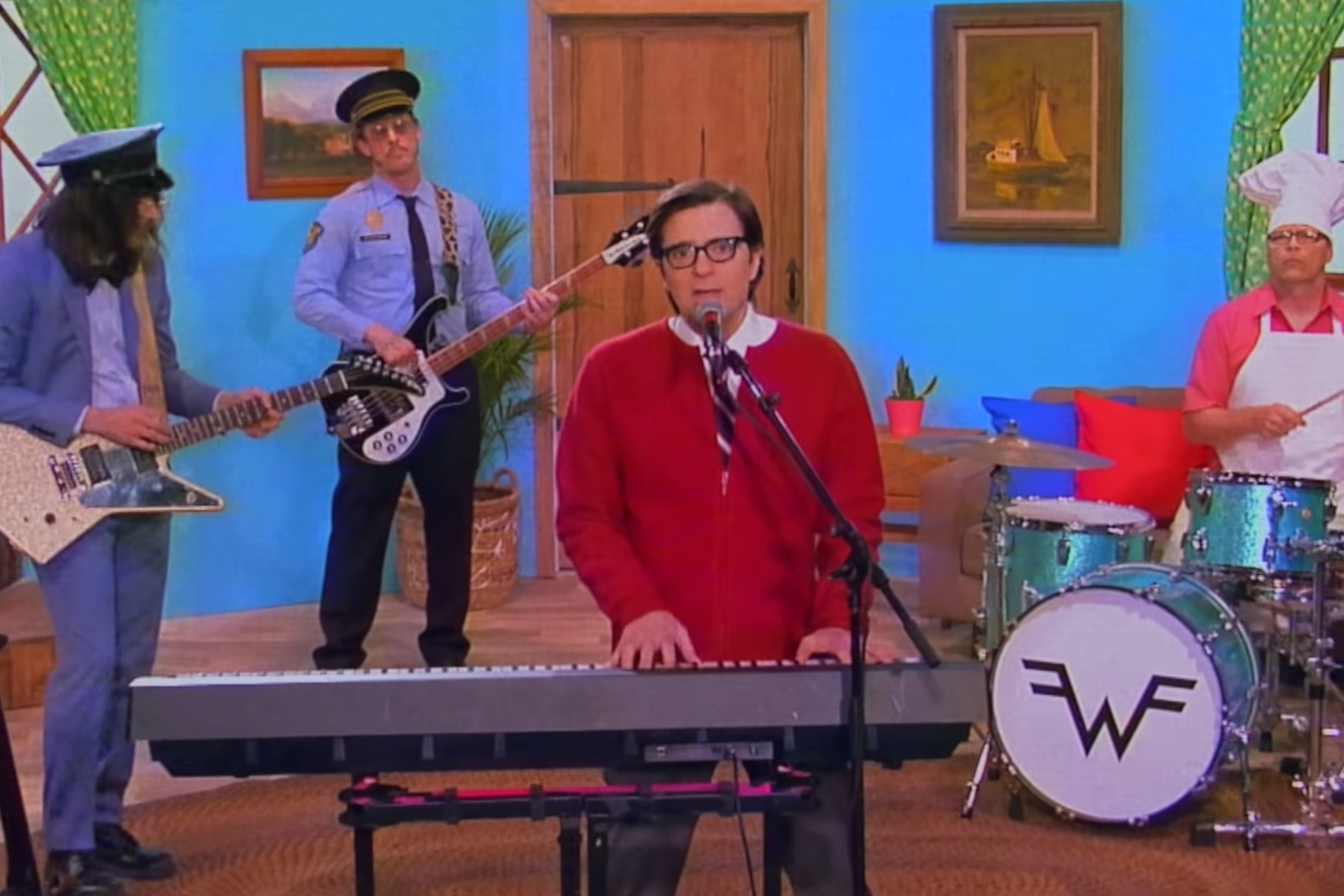
Honesty is a hard thing to come by these days. In the current political and social media climates, it’s hard to know who to believe, who to trust, and who’s actually telling the truth. For these reasons, Weezer’s “I’m Just Being Honest” is refreshing, relevant, and necessary. The song’s truth-telling scenarios are light, relatable, and deal with everyday happenings. Whether it’s telling a significant other what you think about their new haircut, or giving an honest opinion about a band’s new music, Rivers Cuomo & Co present it tastefully in an interesting and comedic way.
When asked about his opinion on his S.O.’s new haircut, Cuomo sings “I thought you looked better before,” before receiving the reply “Hope you like sleeping on the floor.” He also has the nerve to hilariously tell a new band looking for critique that they “sound like shit.” This line alone will likely make smaller artists think twice about handing their mixtape to Cuomo.
During the chorus, Cuomo states “I should have lied / Don’t get mad at me, I’m just being honest.” And that’s the fact of the matter: the truth hurts, and Weezer is here to give you the cold, hard truth.
Musically, the song is not particularly interesting. The upbeat drums drive the song, pushing forward without second thought, and representing the blatant and unfiltered brain of Cuomo. The chord progression is unchanging and repetitive, until the bridge. Luckily though, the vocal melody is diverse, and production techniques like vocal double-tracking and synth layering keep the choruses interesting, and varied from the thinner texture of the verses. The synthesizers and electronic drum beat during the choruses make the song feel sugar-coated and dancy, quite the opposite of the non-sugar-coated lyrics. But hey, maybe that’s what they were going for. After all—I’m just being honest.
Classic 1930’s and 40’s jazz songs are artfully embedded in the lyrics of Hozier’s new song, “Almost (Sweet Music)”. The song pays homage to a number of classical artists such as Duke Ellington and Ella Fitzgerald by integrating song titles, lyrics, and the names of these iconic artists throughout the song. Hozier has created an intriguing and satisfying melody which is pleasant to the ear and the soul.
The Irish indie-rocker keeps his toes in soul, blues, folk, and R&B music for inspiration. The fourth song on Hozier’s newest album, “Almost (Sweet Music)” is a refreshingly different and expressive song, which truly gives fans the history of his inspiration. Opening with hand claps and a catchy beat, the song is a clever mash-up of jazz/soul song titles and artists who influenced Hozier himself in his musical tastes while he was growing up. Sometimes referencing only the artist, sometimes just the name of a song, and sometimes both: “Do I owe each kiss to lip and cheek as soft as Chet can sing ‘Let’s Get Lost’” in the second verse, Hozier pays tribute to Chet Baker’s song, “Let’s Get Lost”.
In an interview with Entertainment, Hozier said that “Almost (Sweet Music)” was “a fun song writing challenge. I was also eager to point to some of the music that shaped my formative years […] it was a way to leave little bread crumbs for younger fans to follow a path to check those songs out”. You can hear a playlist of the songs Hozier pays homage to here.
Hozier released his newest album early March 2019 entitled, Wasteland, Baby! The album touches on important themes such as politics and religion. Billboard recorded this as the first rock album to top the Billboard 200 so far in 2019. It is Hozier’s second studio album.
Hozier’s, “Almost (Sweet Music)” appeared on his newest studio album, Wasteland, Baby! Released March 1, 2019.


 Notes on Notes