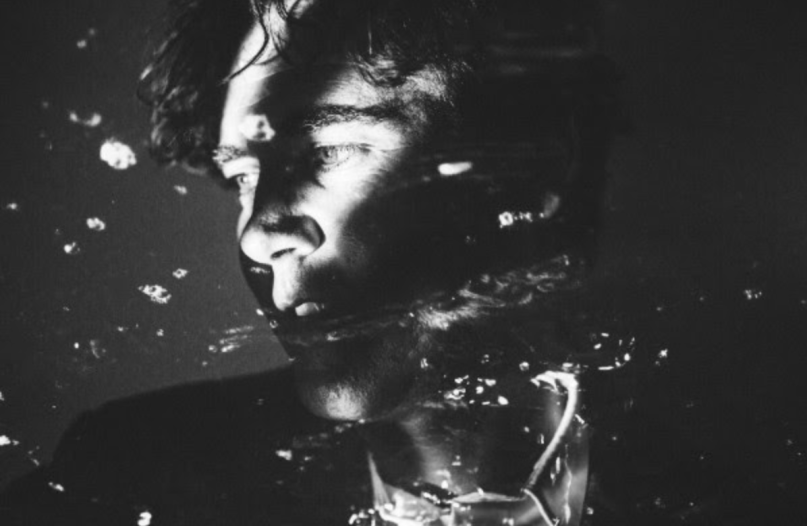
Billie Eilish “wish you were gay” (2019)

           Even though Billie Eilish’s new released track, “wish you were gay” sounds like a simple ballad, there are so many hidden elements in it that are heard each time you press the play button. What makes this track unique is that it is written by Billie and her brother, and it gears away from her “possessive act” in her other latest released track “Bury A Friend.” It is gentle and warm with pinches of twisted characteristics that follow throughout.

           “Wish you were gay” begins with nothing but Billie’s tenderly soft vocals and a raw acoustic guitar to follow; however, this changes quickly after the first verse is sung because it drops a reverb and a sub-bass that causes a rippling effect throughout the rest of the track. The tempo is easy to follow because it is a slowed down “boom boom clap” that is heard in Queen’s admired song “We Will Rock You.” The tempo also works as a metaphor for the hidden audience that can be heard engaging and cheering on Billie through her breakup story. My favorite lines in the track are “I just kind of wish you were gay/ To spare my pride/ To give your lack of interest an explanation” because that way Billie, me, you, and everyone on the face of this earth as a legitimate excuse for their breakup. The track ends like the beginning, soft vocals and acoustics, but fades out with the sound of an audience’s warped clapping. It leaves you wondering what the next song on the album is going to be.

 Billie’s upcoming album, When We All Fall Asleep, Where Do We Go? is set to release this March 29th. With two really well thought out songs already released from this album, I am curious to hear what other hidden elements are included in it.

-Maria

“Empty” – Juice WRLD (Death Race For Love, 2019)

Upcoming rapper Juice WRLD has just released his highly anticipated second studio album “DeathRace For Love” yesterday on March 9th. The rapper first came onto the scene in 2018 when he released “Lucid Dreams” and has been putting out massive hits since. On the newest album, he explores themes of love and heartbreak, and the song “empty” in my opinion perfectly captures what a new listener to Juice WRLD can expect from his music.

Like on many of his other tracks, Juice WRLD doesn’t tend to stick to one method of vocals. Throughout the track he switches back and forth from singing to rapping and often switches up his flow every few bars. This accompanied with the amazing producing makes for an interesting sound and although the song would appear to be sad to anyone looking at the lyrics, Juice WRLD keeps a very upbeat, buoyant sound, primarily due to his powerful singing. In fact I think this is what has made Juice WRLD so popular especially among the younger generations, is his ability to rap about sad things but not produce sad emotions in his listeners. For Example, on the track Juice WRLD says things like  “Empty, I feel so goddamn empty/I may go rogue/Don’t tempt me, big bullet holes” and while this sounds quite depressing, you wouldn’t feel depressed while listening to it. Juice WRLD is great at successfully making his songs relatable and compelling to anyone feeling sad while also not creating more sadness for his listeners, which makes his music perfect break up music.

Overall, although Juice WRLD isn’t a lyrical or even musical genius by any means, he makes music that is real to him and yet stays fun as well, “Empty” is just another track where he successfully does this.

“Record Shop” – Said the Whale (Cascadia, 2019)

By Michaela Maxey

Said the Whale released their sixth studio album Cascadia on February 8th, and it’s unlike anything they’ve done before. This album has essences of folk, alternative rock, and indie, making each track unique as they constantly vary between these genres. Yet, “Record Shop” sticks closer to the rock sound their known for and makes it seem a bit out of place on the album. Nonetheless, it’s a solid track that anyone can nod along to.

The track explores a love for music that makes it easy to escape into another world. As the narrator in the track faces heartbreak, he’s able to find some sort of peace at the record shop. Ultimately, being there and listening to music is the one way that he can feel better. Although the song is somewhat metronomic in its delivery, there is a sweet harmonizing in the middle that is a nice and unexpected twist. This harmonizing makes the track feel inclusive by creating a unity amongst the bandmates while inviting the listener to join in and celebrate with them. As the track winds down, the keyboard becomes a bit imperfect in its sound and the volume slowly fades to nothing. Somehow, Said the Whale has perfectly captured the image of the needle of a record player moving across the record. They also reenact the brief moments of silence between tracks on a record and truly make me forget that I’m listening to it through Spotify.

For all music junkies out there, there’s no doubt that this song will resonate with you. Said the Whale captures our dilemma with the simple lyric,“I wish that I could drop a million bucks.” Until the time comes that we can drop some serious cash at our local record stores, we’ll have to stick with Said the Whale who seem to truly understand the plights of a music junkie.


Cage the Elephant, “Ready to Let Go” (Social Cues, 2019)

By: Julia Ristoska

Cage the Elephant return with their new single “Ready to Let Go” from their upcoming fifth studio album Social Cues which will be fully released April 19th. This upbeat song can be portrayed as a perfect “I am moving on from my relationship” anthem. This song is about failed relationships and learning as a individual you must learn to take control of the situation and move on. This connected deeply to lead singer Matt Shultz who just recently divorced his wife of seven years. Although the song “Ready to Let Go” talks about moving on it wasn’t such an easy journey for Matt. In the Rolling Stone article his band mate and brother mentioned that during the making of the album Brad confessed, “we’d think he was getting back to normal, then he would melt down.There was a fair amount of self-medication and intense isolation.”

His emotional instability that developed after the divorce reflects in the song. The drums are bouncy, the guitars are bright and polished which reminds me of Arctic Monkeys. Yet the instrumentation creates a cheerful tone. However, when focusing on his voice the strong and aggressive way he pronounces each word creates a very angry tone. It can be taken as passive aggressive, and makes you wonder if he moved on or saying he did just to trick his mind in believing so. The structure and lyrics of the draws listeners attentions since there is a sense of melancholy behind it despite it being a catchy radio friendly tune. Unlike their older songs like “trouble” the lyrics has a melancholy undertone as he sings, “don’t you worry, baby, no sense trying to change it// I’ma strike these matches, never had control//I’m ready to let go, no, was I fooling myself?//I’ma spread these ashes, never had control/I’m ready, I’m ready, I’m ready to let go.”

There is an emotional core in his lyrics that shows his relationship unfolding. Matt was very clever to structure the lyrics that has a hidden message, and requires multiple listens to get the story. In the beginning he even alludes to Pompeii, which is significant since it’s a trip he and his wife decided they needed a divorce.

There is a wave of emotions in the song and if you listen closely you can feel the pain of the breakup. However, if you came across the song on the radio it’s easy to bob your head to, and not pay attention to its meaning. The catchy instrumentation almost acts like a bandage to cover his sorrowfulness.

“Feel Something” by Adam Lambert (2019)

It’s been nearly 8 years since anyone has heard of the name Adam Lambert, unless you’re like me and have been keeping tabs on him ever since Lambert’s American Idol days (Raise your hand if you think he should have won Season 8). When you think of Lambert, you think of eccentric glitter and dark eyeliner singing to the outcasts of the world, with his acrobatic vocals to puncture the rock and roll lyrics into your head as you rock out channeling your inner 2009 “punk-rock era”.

As tradition of being the runner-up on Idol, Adam has gained more popularity than his fellow competitor who had actually won the competition. He went on to release four albums and briefly work in TV, starting his career off on an “Original High”. After 2015, Lambert fell under the radar and kept to himself only releasing a single or two in the past couple of years. He says around this time he fell into a depression, where he felt as if he had no direction in his life and was frustrated with his career. After relfecting on all the good he has had in his life, his family and friends and his experience of playing as the frontman for Queen for 2 years now, Lambert took his pain and turned it into an achingly beautiful testimony of his life throughout the past couple of years.

“This was written about me defying my disillusionment, owning my needs and opening my heart […] there have been many times where I’ve had to compromise on my artistic vision, and I’m coming out of a dark period of second guessing my own artistry and having my mental health suffer because of it.”

This song takes a drastically different turn from his initial sound, and opts for a light guitar and drum instrumental, followed by a chorus in the background to emphasize his angelic singing style. Even if you aren’t a fan of Lambert’s earlier work, you may enjoy listening to this track because Lambert uses it to build on a new chapter of his music career.

So it seems like Lambert is temporarily hanging up his guy-liner and trading it for emotionally raw and heartfelt lyrics of heartbreak and isolation that everyone at one point could resonate with. So “for your entertainment”, click the link below and allow yourself to feel something through the melody and tempo of this song.

-Genna Dara

Hayes Carll’s “What It Is” 2019 Album Review


Divorce, depression, and self-reflectivity.  These are the themes that have been haunting Hayes Carll’s previous albums up until recently. What It Is breaks out of that shell and embraces the ability for change and well-balanced wittiness, to shine through in his lyrics and the overall theme of the album; integrating personal and political into his tracklist.

Hayes Carll’s album uses all of the conventional country elements-fiddles and guitars included- as well as his Texan and Nashville roots, to create a fun, and meaningful outlook on how he sees his life through a new rose-coloured lens. The album is light and simple with underlying political tones that reflect all that Hayes has learned and observed over the past year, he hides under the familiar dry humour that features in his other albums, and allows the listeners to slow down and meditate on the ideas he poses about how we see the world around us. In an interview with Rolling Stones Country, Carll explains his inspiration for writing the album and why.

“I take stock of the world around me and write about it […] This isn’t by any means a political record, but there are observations or my takes on certain things that are important. I understand a lot of people look to music as an escape, it can be really upsetting when it feels like that’s disrupted.”

Hayes Carll on his sixth album.

His first song on the album titled “None’ya” is an homage to his country background and a testimony to his wife, in which the album is co-written by her. It is one of his many love songs on the album that is self-reflecting without much reflecting going on, Carll’s witty lyrics prevent the listeners to delve anywhere deeper than the initial surface level. I find that splashing around on the surface, eases the listener into the political undertones of his music. His chorus hits home on the thought of changing aspects of his own life, “I try because I want to/ I know you heart the best way that I can/ Girl all I want to do is be your man.” It’s also interesting to listen to the love songs on the album and notice that he is singing in a first-person perspective that proves in his lines that he is singing and reflecting on himself and the idea of masculinity- how he can be a better man and husband, not just the fact that his woman in question is both cool and eccentric.

The lines in his second track, “Times Like These” mask the social and political messages behind upbeat fiddle chords and melodic singing, with lyrics such as, “but it sure is getting warm ‘round here in times like these/ in times like these do I really need a billionaire?” Carll delivers the balance between music and lyrics in sort of a “late-night barstool nightclub performance scene” that is personal and eye-opening if you listen to the lyrics close enough. The order of the tracklist is delicately balanced between slow and fast-tempoed songs, for the most part, equally alternating between what I like to refer to as “the fine line between falling back in love, and falling out of love with the world”. The variety of tracks mixed with the fussy string and brass arrangements, bring an unwavering directness to the character’s narrative, that Carll creates with telling this narrative as he’s sitting on a stool and an open-mic bar in a small town.

About nearly halfway into the album, something that Carll, Allison Moore, and the producers do significantly, is create an equilibrium between soft-strumming guitar and wailing harmonicas with the almost rock n’ roll style drumming and guitar chords. In songs, like “Things You Don’t Wanna Know” and “If I May Be So Bold” are the love songs that slow down the album’s movement altogether, and give profound and thoughtful lyrics to lead the audience towards the first central idea that he discovered when writing this album. He wrote it as a way to reflect on himself and the person he is today because of his tumultuous past. “I’ve wrestled with the question of just who I aim to be/ Been dealt hands I had to laugh at/ And some hands I’d like to fold/ But I’ll play ’em all, if I may be so bold…” lyrics like these show just how much he has grown since his last album, Lovers and Leavers, rising from the ashes of heartbreak and divorce to the next stage of turning over a new leaf with a new wife and a new life as a better man. The last couple of tracks on the album refer to the political approach he’s trying to shed light on in the matter. “The whole world is exploding and I know it feels so strange/ It must make you so damn angry they’re expecting you to change/ Fragile men” In this song, he calls out the right wing Americans who refuse to change their political views to match the evolving state of the world we are living in today.

Overall, the message of the album is widely pleasing to listen to because its melodic and upbeat nature of the tracks. The instruments and sentimental lyrics play together beautifully to present a simple and light-hearted sound that you can listen to anytime. However, if you wanted to listen more intuitively to the album and its underlying meaning, you are able to hear the message of the song jumping out subtly at you- its hidden under classic country chords and dry-humoured wit. The album is great to listen to if you just need a simple soundtrack to listen to on your teal-painted front porch on a sunny afternoon in the South.

-Genna Dara

Weezer’s “Piece of Cake” (2019)

By Mina Wiebe

I’m not usually a huge fan of pop songs brimming with “do-do-do-do” fillers, but for Weezer I’ll make an exception.  Their new 2019 “Black Album” has faced some pretty harsh critiques so far, and despite loving the band, I’ll admit I’m not particularly amazed by the album as a whole. I wanted to love it, but instead I decided to go with my gut and give the band a break since they’ve managed to push out an impressive thirteen albums. And “Black Album” does have good moments; for me, the album’s hidden gem is the fourth track: “Piece of Cake”.

The light, cheery title pairs with the song’s opening outpour of “do-do-do-do’s” to make you think you’re about to hear another upbeat Weezer tune. But in typical Weezer fashion, don’t be fooled by first impressions. Suddenly the opening lyrics pop up and your hear Rivers Cuomo’s tenor vocals declare “Let’s do hard drugs/ Fix our problems/Let me swing by/Tears in my eyes” leading in to the song’s hook: “She cut me like a piece of cake”. So yeah, not the sweetness you’re expecting.

Lyrically, the song is pretty simple, but I couldn’t help but enjoy the cynical wittiness of some of the lines. Near the end of the song for example, the lyrics “Hey man, cheer up/Make your own luck/Have a nice life/Have some more Sprite” made me absolutely giddy because if you’ve ever been sad, there’s always that one asshole who tells you to just “stop being sad”, and here he sounds exactly like that asshole. I could hear the sarcasm dripping off of Cuomo’s tongue in this line, and I appreciated the subtle yet brilliant self-awareness that I’ve come to expect from the band.

So no, “Black Album” wasn’t a win for me, but I guess you could say that “Piece of Cake” definitely…takes the cake (should I hold for applause, or let myself out?). But in all seriousness, it’s worth giving the album a listen to form your own opinions, and I really think that “Piece of Cake” in all of its bleak, sarcastic glory wins my vote for best track of the album.

Album Review: Girlpool’s “What Chaos Is Imaginary”

By: Julia Ristoska

Leaving childhood and entering adulthood can be frightening and confusing at first. Sometimes it can feel so overwhelmingly complicated that you want to scream your head off. Cleo Tucker and Harmony Tividad from the duo group Girlpool began their career by streaming out their frustrations at the young age of 17. They started off being a couple of teenagers, created a friendship, and used music as their medium to understand the complexities of the world. They definitely made a drastic change from their self-titled 2014 EP. In comparison to their “Blah, Blah, Blah” days their 3rd studio album What Chaos Is Imaginary is much more sophisticated and constructed. They transition out from their awkward teenage phase and found their own sense of identity. In this album they no longer aggressively yell at each other;instead,these grown individuals engage in a full length inner conversation.

One of the major differences from Girlpool’s pervious albums is the vocals. This is the first album released since Tucker came out as transgender and started taking hormones that transitioned his voice into a lower tenor. Tucker said in an interview, one of the more difficult things about his transition “is feeling like my own voice is foreign to me.” Tucker is trying to rediscover who he is not just as an individual but also as a member in the band. His newly refined deep voice opens up on the first track, “Lucy”, as he sings, “An unfamiliar stage where you’d rather stay//A meditation plan when you sway and sink.” This melancholy indie rock tune discusses Tucker’s detachment of being on stage, but he knows it’s a place he belonged all along. He mentions it as a therapeutic place where he can “sink” into and feel comfortable in. His stretched out voice and slowed down tempo builds up providing an emotionally powerful wave of sound.

Ironically, the group is called “Girlpool” yet they are not quite swimming into gender conforming roles. They always challenge the ideas of what it means to be a “woman” in what they refer to as a “f*cked society”. A famous example is from their song “Slutmouth” from their self-titled EP. They sing, “Sometimes I wanna be a boy//Never really wanted girl toys” and “I don’t really care about the clothes I wear//I don’t really care to brush my hair//I go to school everyday//Just to be made a housewife one day.” Their lyrics are transparent and straight to the point. They do not hide who they are and showcase their real and genuine emotions and expressions through their music. With Tucker’s transition the duo still keeps the theme of finding their own sense of identity and individuality. They try to piece together broken fragments and build a unified bond and relationship with who they become.

The metaphor of drowning and sinking seems to occur throughout the album. It was mentioned in “Lucy” and reoccurs in “Where you Sink” where Tividad’s dream-like voice sings, “I know you live where you sink” and further sings “Go running around the alphabet sea//I wanna try to be a ribbon in a puzzle mind.” Her small voice feels distanced, and if you further listen her voice fades into a muffled whisper as if she was at the bottom of the ocean drowning.This is also seen in their instrumental piece “Minute in your mind” which consists of only a few lines. The instruments are drowning and the vocals are hidden in between the layer of guitars and synths. If you close your eyes and listen closely the lyric “you help me sink” surfaces over the hum of the guitars. Again the duo are trying to piece things together and keep afloat on top of the chaotic world.

Unlike their other albums one major difference is that many of the songs they were writing were written apart from each other. They lived in different cities and would send each other the tracks. The distinctive trait in Girlpool before was the overlapping vocals that fight against each other and become overwhelming to listen to. However, the layering of vocals is a very clever technique to express them unified as a whole but lost in a world that they don’t understand. The music is overpowering and their vocals drown in the chaos.

This contrasts with their new album in which there are two very distinctive voices. Tracks such as “Hire” and “Swamp and Bay” focus on Tucker’s voice without Tividad’s signature sweet voice overlapping. Tucker’s songs also give off a folksy rough tone with layers of brighter guitars in the background. Tividad’s most prominent song is the album’s title track “What Chaos is Imaginary”. It takes the spotlight with her hypnotic voice and classical string instruments intertwined with her dreamy voice. In an interview, Tividad mentioned she was having PTSD episodes and was having troubles getting in the present mindset and wasn’t able to focus on social situations so she wrote this song which is “about reckoning with this—trying to find a path to forgiving myself, attempts to redevelop a relationship with the world where I could find some illusion of ‘safety’ and belief in the fact that I could ultimately take care of myself.” The idea of the illusion and finding something to grasp onto is reoccurring in their more meditative dream-like songs like “Chemical Freeze and “Roses.” These ghostly songs focus on exiting one world and transferring into another. This refers back to them growing up from their troubled teenage years to finding their identity.

One thing that was recognizable was that there was two parts to the album. It was no longer Girlpool as a collective whole but Tuckers and Tividad’s own personal mini album in one greater album. Each song acts like a fragment; however, they still work as a unified piece. This album focuses on what Tividad calls “inner communication” which makes it more abstract and complicated which contrasts to their screaming transparent music before. This album is all about growth and finding their own identity in where they stand in the world, musically and within themselves.

And that must have been on chaotic episode to figure out.


Album Review: Cass McCombs’s “Tip of the Sphere”

By Mina Wiebe

Cass McCombs does not care what you think.

His ninth and newest album “Tip of the Sphere” is a whirlwind of creativity, politics and dark, dystopian narrative all packaged up in an unexpected fusion of sounds. Listeners might be tempted to say it’s “jumbled” or “all over the place”, and maybe they’d be right—but I can guarantee McCombs wouldn’t bat an eye.

At this point in his career, McCombs has made it immensely clear that he’s not one to prioritize catering to the masses for the sake of selling, and this album is definitely the cherry on top of the “I-don’t-care-what-you-think” cake. Don’t get me wrong, the guy makes gorgeous music and this album is no exception, but it’s clear that he creates the kind of music he wants to create—and it’s absolutely refreshing. McCombs doesn’t seem to follow the tricks and trends of the latest viral hits, and he certainly doesn’t restrict himself to a particular sound or genre in order to please a certain demographic. While some might argue that a lack of consistency might indicate that an artist hasn’t yet “found their sound”, for McCombs it simply means he’s been in the music business for a whopping fifteen years and has decided he’s going to do whatever the hell he wants to do.

Will Schube of Fader Magazine recently asked McCombs if he ever feels exhausted after fifteen long years of music, to which the musician replied that “[a]nybody’s job is gonna be annoying at some point, but I’m grateful that I get to speak my mind and write crazy songs about topics people don’t care about.” And that’s precisely what he seems to do in “Tip of the Spear”. The songs are dark, political at times, and delivered in a scattered, overlapping of genres. Song-topics range anywhere from anti-capitalism in “American Canyon Sutra” to an attack on environmental instability in “Sleeping Volcanoes”. The fact of the matter is, Cass McCombs creates the music he wants to create, with the messages he wants to tell, and if you don’t like it—he’d probably tell you that you’re shit out of luck.

The album is full of spontaneity; it’s absolutely brimming with unexpected twists and artistic choices that both shock and delight. If I absolutely “gun-to-head” had to sum it up by genre, I’d say it’s a rock album, but that honestly feels like I’m doing it a disservice. The album is by all means influenced by Americana—it’s predominantly rock, but there’s also hints of jazz, indie, and folk scattered throughout. If you’re looking for a consistent sound in terms of genre, you’ve come to the wrong place—but I’d gladly recommend enjoying the pleasant chaos that is “Tip of the Spear”.

 The album leads you in with “I Followed the River South to What”, this hazy, seven-minute song that features a simple guitar riff, equally simple and repetitive drum beats, and McCombs’ smooth, modulated vocals that guide you through like a hot knife through butter. It’s reminiscent of a more “serene” classic rock, similar to Led Zeppelin’s “Stairway to Heaven”, but don’t get too comfortable. The second track gives hints of what’s to come by veering slightly from what’s expected. There’s still guitar riffs and strong drum beats at the song’s core, but compared to its predecessor, “The Great Pixley Train” is a far bouncier track in its use of banjo. McCombs’ voice even has hints of a country’s singer’s twang, which I found both confusing and delightful. The song is most definitely a foreshadowing for what to expect in the forthcoming tracks.

Skip ahead to the fourth track “Absentee” for example, which almost completely deters from rock with the introduction of a piano ballad, and later, a mellow and jazzy pairing of saxophone with the “wah-wah’s” of a pedaled bass guitar. The next track “Real Life” is even more of a surprise, with its layering of bongos, piano, acoustic guitar, violin, and trumpet, resulting in a folk-jazz hybrid. McCombs does make sure to return to the more classic-rock sound in songs like “Sleeping Volcanoes” and “Sidewalk Bop After Suicide”, but he keeps you on your toes with strange tunes like “American Canyon Sutra” which initially sounds like a dance-song due to an introduction of an almost electronic-pop beat, but later transforms into an echoey spoken-work poem.

The songs are gloriously connected through the strong vocal abilities of McCombs, but initially it seems like his voice is the only thing unifying the album and connecting the songs to one another. The tracks are clearly catchy and well-done, and McCombs’ talent shines through in each of them, but it’s also pretty obvious that there’s a disconnect between many of tracks in terms of sound and theme. While I realize that McCombs is the king of artistic integrity and can do whatever he wants to do with his music, I still had to question if the album was successful as a unified piece. Could it be considered a “successful” album despite being all over the place?

And then I realized McCombs’ method of seduction.

The singer does precisely what he sets out to do: he writes crazy songs to speak his mind about topics he is passionate about. And yes, he does it in a seemingly bizarre overlap of genres and sounds, and no, the songs don’t necessarily flow into one another or even necessarily compliment each other. But each song is fascinating and brilliant, and the talent is there. The main allure is that he keeps you on your toes, not knowing what to expect, and not knowing whether the next song will be an exciting, upbeat rock tune or a mellow jazz melody. The album may not be unified in the conventional sense, but it worksas a unified piece because it’s a compelling and thrilling listen that sends a messages in each song, whether he’s singing about environmental issues or the evils of American capitalism. The singer may not care what you think, but he cares about real issues and creates some damn-good music to get his point across in this album.

Album Review: Get Tragic from Blood Red Shoes

by Danielle Bulhoes

We’ve all had those moments that come after heated arguments, or when someone throws a nasty comment or mean criticism your way and you think of the perfect thing to say way too late hours later. We all know how it feels to have that encounter just stew inside you until a flash of inspiration hits and it releases all that negativity in that perfect sentence you wish you had when you needed it. This is what you get with Blood Red Shoes’ newest album, Get Tragic.

Between this and their last album, the alternative rock duo of Blood Red Shoes, Laura-Mary Carter and Steven Ansell, have been through a lot together. Get Tragic is an album filled with social anxieties and tension, Carter and Ansell clearly working through their frustrations with each other, as well as their frustrations about their lives and the music business. Carter especially, having injured herself during a biking accident, was unable to resume her role as the group’s guitarist and had to limit herself to vocals when recording the album, which is probably why the tracks feature so many synth sounds. The couple eventually reconciled enough to come back together and work through their issues, creating a pretty standout collection of songs.

The first track, “Eye to Eye”, sets the mood for the rest of the album. Filled with tension, it clearly addresses the problems that Carter and Ansell had to work through in order to come back and make Get Tragic. The chorus replays the same phrase, “We don’t see eye to eye”, giving the listener a good idea as to the fragile layer of apprehension, ready to break all over again if someone makes a single wrong move. It’s pretty cathartic actually, especially for those of us who have difficulty putting our frustrations into words. Using “Eye to Eye” as an outlet, the listener can let go and imagine themselves confronting the people that might have pissed them off all from the safety of their own homes. I’ve always found the electric guitar to be the best instrument that was aggressive enough to fully summarize any adverse feelings I had and was unable to put into words. The use of the electric guitar in this song is just right that it makes me feel like my body is just slowly releasing all the tension in it without me having to throttle someone.  However, using this song as an outlet, the listener gets no real resolution to their problem, much like the song, which ends abruptly saying “We don’t see eye to eye.” It really showcases how things that we leave unsaid really impedes our ability to get closure.

Another track that’s a good example of the subject being unable to get closure is the song “Beverly”. The singer meets a man at a wedding and the man shares a story about his love for the bride. He tells the listener that “I know that I love her/ In these ways that you could never understand” and how torn up he is seeing her with another man. This man goes on to say how he slipped into despair with nothing but a lock of hair from her as a keepsake. The song is melancholy, Carter and Ansell’s voices layering during the chorus with synth sounds that make for a really dour and bleak atmosphere.

Not only does this album deal with outer conflicts between the artists and subjects of the songs, but they also take the time to look introspectively at themselves, ask at what level they were responsible for their problems and how they respond to that. In “Find My Own Remorse” Ansell takes over the lead vocals, with Carter offering up some backup. The lyrics for this song speak of a deep depression, Ansell’s tone almost apathetic as he sings about how he can’t be made to give the people badgering him the time of day, he’s just done with it all. But he’s mindful about what he’s thinking and feeling, aware of where these kinds of thoughts can lead and the danger in that. He sings that “I can’t give these thoughts the time of day…I am my own worst enemy”. Acknowledging this, Ansell promises to look for another way to deal with these feelings.

“Mexican Dress” follows a trend that’s been popping up a lot with artists. Carter herself has stated that “the track Mexican Dress is about the lengths people will go to for attention. Whether it’s online or in real life – small hits of validation and the feeling of having all eyes on you have become our generation’s biggest drug problem.” Carter’s voice dominates this track as she chastises the people who will do anything for their fifteen minutes in the spotlight. The music is a bit more fast-paced than most of the other songs, a reflection of how some people try to gain fame as quickly as possible without thinking of consequences and disregarding mental health if things should get out of control too quickly.

Blood Red Shoes explores their anxiety, their frustrations and the tension between them after a bad falling out in their newest album Get Tragic, a study in how people approach the relationships in their lives, whether they be someone the artist looks down at while on stage, someone they interact with on a social media setting, a good friend, a stranger they met at a wedding, or when they’re just looking inward at themselves. Get Tragic is an album that explores everything we wish we do and don’t say to the people around us and the effect that has on us emotionally, mentally and physically. The electric guitar is the perfect tool to de-stress the listener and translate the dissatisfaction Carter and Ansell have with themselves, each other and the world in general. Get Tragic is a great album if you’re looking for a little anger management in your life, ready to help you and lend you an understanding shoulder to lean on because you’re not alone in your anger and anxiety.