
By Michaela Maxey
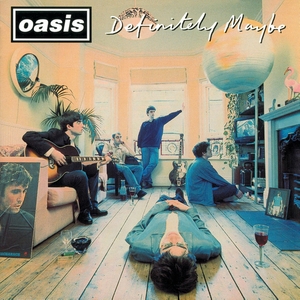
The year of 1994 was economically disastrous for the UK under Margaret Thatcher’s government. There was widespread strikes amongst the public sectors and unemployment had reached 3.2 million people. So how did two brothers from Burnage, a somewhat unremarkable area of Manchester, rise through all the struggles they saw around them? It wasn’t easy for Noel and Liam Gallagher, but they did manage to come together. Liam had originally been part of an earlier band called Rain with drummer Tony McCarroll and guitarist Paul Arthurs. Once Noel joined, the band name was changed to Oasis. In ‘94 the band released their debut album Definitely Maybe which became one of the most sold debut albums of the time, reaching as far as North America where it became just as popular.
In Definitely Maybe, Noel Gallagher brings forth honest and blatant statements, never shielding away from potential backlash. This is especially seen in songs like “Up in the Sky” and “Cigarettes and Alcohol” that constantly reference drugs. These songs are drastically different in their sounds, that is “Up in the Sky” offers a quick beat and drawn out lyrics while “Cigarettes and Alcohol” slows it down into something that sounds more like an ode to drugs. Although I don’t recommend doing anything suggested in these songs, I’m loving how badass they are and the ‘cool’ feeling I get listening to them. Tracks like “Rock ‘N’ Roll Star” and “Supersonic” offer a certain loudness to the album through their use of electric guitar and drums that mimic the loudness of society; if the noise of workers striking was ever captured, it would be in these songs. There is no quiet song until “Married with Children,” the final song on the album, plays. After crashing our way through the tracks, we get a certain quietness that feels like credits in a movie beginning to role and the audience sitting in awe of what they just witnessed.
Truly, this album is a masterpiece. It somehow combines the smugness of the Sex Pistols and the melodic tunes of Paul McCartney, constantly weaving between the two extremes and reflecting the instability that both the band and society were facing.
 Notes on Notes