
By Mina Wiebe
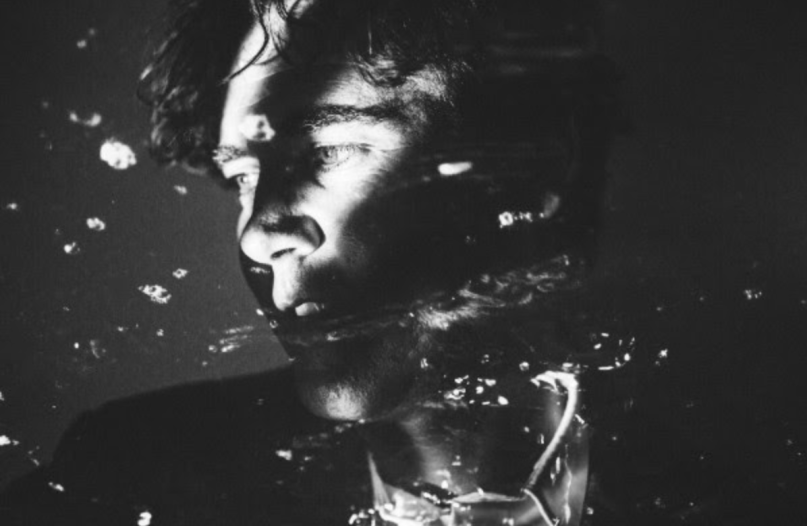
Cass McCombs does not care what you think.
His ninth and newest album “Tip of the Sphere” is a whirlwind of creativity, politics and dark, dystopian narrative all packaged up in an unexpected fusion of sounds. Listeners might be tempted to say it’s “jumbled” or “all over the place”, and maybe they’d be right—but I can guarantee McCombs wouldn’t bat an eye.
At this point in his career, McCombs has made it immensely clear that he’s not one to prioritize catering to the masses for the sake of selling, and this album is definitely the cherry on top of the “I-don’t-care-what-you-think” cake. Don’t get me wrong, the guy makes gorgeous music and this album is no exception, but it’s clear that he creates the kind of music he wants to create—and it’s absolutely refreshing. McCombs doesn’t seem to follow the tricks and trends of the latest viral hits, and he certainly doesn’t restrict himself to a particular sound or genre in order to please a certain demographic. While some might argue that a lack of consistency might indicate that an artist hasn’t yet “found their sound”, for McCombs it simply means he’s been in the music business for a whopping fifteen years and has decided he’s going to do whatever the hell he wants to do.
Will Schube of Fader Magazine recently asked McCombs if he ever feels exhausted after fifteen long years of music, to which the musician replied that “[a]nybody’s job is gonna be annoying at some point, but I’m grateful that I get to speak my mind and write crazy songs about topics people don’t care about.” And that’s precisely what he seems to do in “Tip of the Spear”. The songs are dark, political at times, and delivered in a scattered, overlapping of genres. Song-topics range anywhere from anti-capitalism in “American Canyon Sutra” to an attack on environmental instability in “Sleeping Volcanoes”. The fact of the matter is, Cass McCombs creates the music he wants to create, with the messages he wants to tell, and if you don’t like it—he’d probably tell you that you’re shit out of luck.
The album is full of spontaneity; it’s absolutely brimming with unexpected twists and artistic choices that both shock and delight. If I absolutely “gun-to-head” had to sum it up by genre, I’d say it’s a rock album, but that honestly feels like I’m doing it a disservice. The album is by all means influenced by Americana—it’s predominantly rock, but there’s also hints of jazz, indie, and folk scattered throughout. If you’re looking for a consistent sound in terms of genre, you’ve come to the wrong place—but I’d gladly recommend enjoying the pleasant chaos that is “Tip of the Spear”.
The album leads you in with “I Followed the River South to What”, this hazy, seven-minute song that features a simple guitar riff, equally simple and repetitive drum beats, and McCombs’ smooth, modulated vocals that guide you through like a hot knife through butter. It’s reminiscent of a more “serene” classic rock, similar to Led Zeppelin’s “Stairway to Heaven”, but don’t get too comfortable. The second track gives hints of what’s to come by veering slightly from what’s expected. There’s still guitar riffs and strong drum beats at the song’s core, but compared to its predecessor, “The Great Pixley Train” is a far bouncier track in its use of banjo. McCombs’ voice even has hints of a country’s singer’s twang, which I found both confusing and delightful. The song is most definitely a foreshadowing for what to expect in the forthcoming tracks.
Skip ahead to the fourth track “Absentee” for example, which almost completely deters from rock with the introduction of a piano ballad, and later, a mellow and jazzy pairing of saxophone with the “wah-wah’s” of a pedaled bass guitar. The next track “Real Life” is even more of a surprise, with its layering of bongos, piano, acoustic guitar, violin, and trumpet, resulting in a folk-jazz hybrid. McCombs does make sure to return to the more classic-rock sound in songs like “Sleeping Volcanoes” and “Sidewalk Bop After Suicide”, but he keeps you on your toes with strange tunes like “American Canyon Sutra” which initially sounds like a dance-song due to an introduction of an almost electronic-pop beat, but later transforms into an echoey spoken-work poem.
The songs are gloriously connected through the strong vocal abilities of McCombs, but initially it seems like his voice is the only thing unifying the album and connecting the songs to one another. The tracks are clearly catchy and well-done, and McCombs’ talent shines through in each of them, but it’s also pretty obvious that there’s a disconnect between many of tracks in terms of sound and theme. While I realize that McCombs is the king of artistic integrity and can do whatever he wants to do with his music, I still had to question if the album was successful as a unified piece. Could it be considered a “successful” album despite being all over the place?
And then I realized McCombs’ method of seduction.
The singer does precisely what he sets out to do: he writes crazy songs to speak his mind about topics he is passionate about. And yes, he does it in a seemingly bizarre overlap of genres and sounds, and no, the songs don’t necessarily flow into one another or even necessarily compliment each other. But each song is fascinating and brilliant, and the talent is there. The main allure is that he keeps you on your toes, not knowing what to expect, and not knowing whether the next song will be an exciting, upbeat rock tune or a mellow jazz melody. The album may not be unified in the conventional sense, but it worksas a unified piece because it’s a compelling and thrilling listen that sends a messages in each song, whether he’s singing about environmental issues or the evils of American capitalism. The singer may not care what you think, but he cares about real issues and creates some damn-good music to get his point across in this album.
 Notes on Notes