Amidst the insurgence of the pop-rock-grunge-alternative music scene, Jeff Buckley was the steadfast stone against the current that was the onslaught of popular punk-rock music. While Greenday released their first major studio album, Dookie, and ushered a new era of pop-culture music, Buckley instead chose to be the resistance. Combating the music scene which threatened to be homogenized into the new and growing sound of grunge-punk, Buckley flooded the music scene with his original folk-rock songs and re-vamped versions of classics like Led Zepplin’s, “Night Flight”.
The most important aspect Buckley brought to the table was his incredible voice. Somehow both ephemeral and tangible at once; Buckley’s voice truly is angelic, and I understand where the title of the album comes from. The album opens with his original song, “Mojo Pin,” which features Buckley’s voice breaking through silence in a haunting and sublime interference, as the song fades in so slowly it is almost imperceptible at first, before building with Buckley’s vocals.
Buckley had a huge impact on the music scene in New York in 1994. Where other musicians had tried to kick off their career by doing covers of songs that were (already) over-done, trying to play them in the exact same way; Buckley shone through the masses like a lighthouse. His renditions of the same songs were always vastly different and always stimulating. Take for example his cover of Leonard Cohen’s song, “Hallelujah”. Arguably a favourite to be covered by artists, all of them always sounding the same. Except of course, for Buckley’s version. Indeed, Buckley’s version of the song has come to be the most popular version of the song. Included as the sixth track on the Grace album, Buckley’s rendition of “Hallelujah,” could not be more different than Cohen’s. Where Cohen’s version is comprised of a heavy, jazzy-blues sound, Buckley turns “Hallelujah,” into a light, airy melody which truly gives the impression that he knows the secret chord.
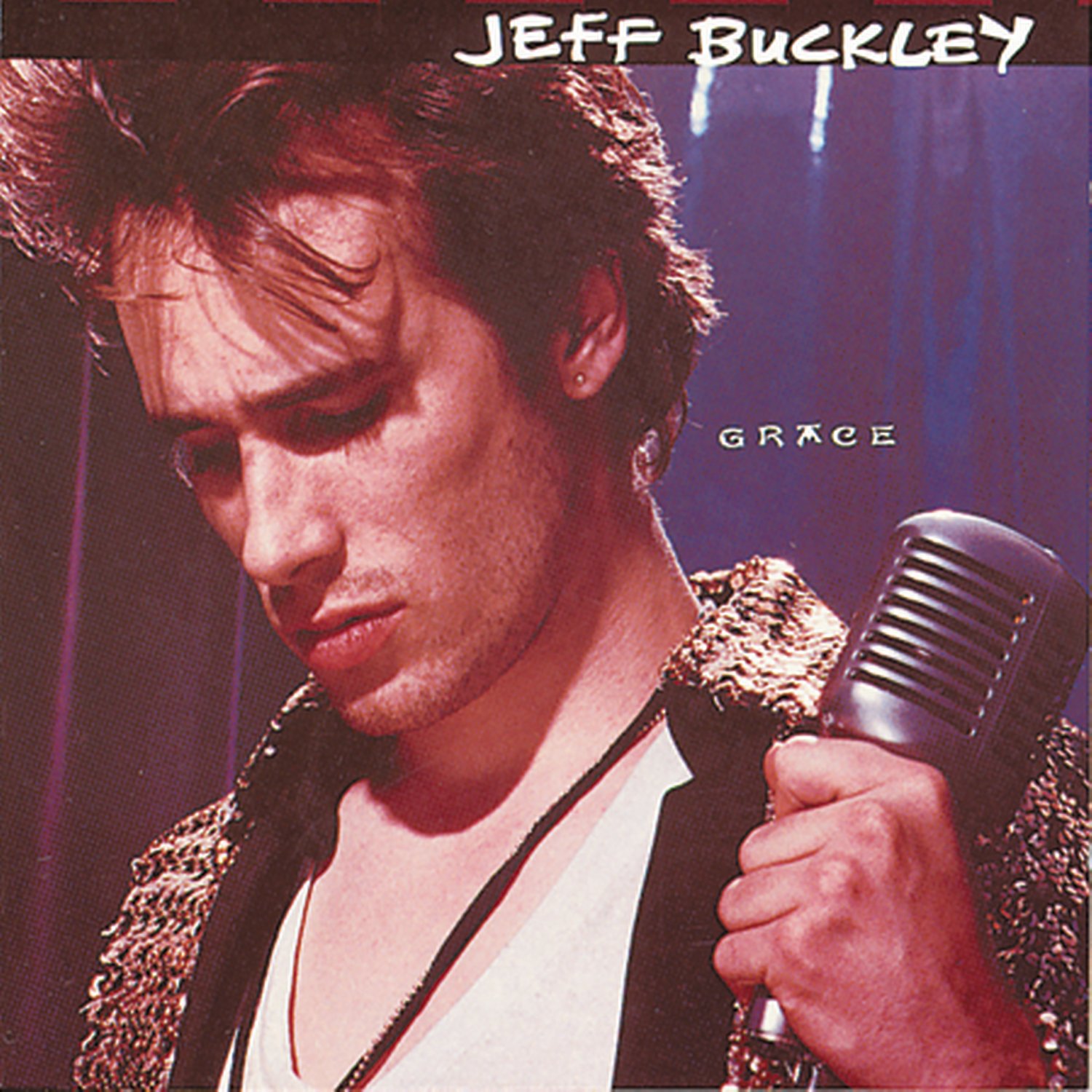
Jeff Buckley’s album, Grace, is one that has stood the test of time, only becoming more popular since it’s release in 1994. Grace will continue to inspire for years to come.
Jeff Buckley’s only full length studio album, Grace. (August 23, 1994).
1994 was a year of a renaissance in all aspects of popular culture. The internet was rising in mainstream popularity: Aerosmith was the first band to give a song away for free online. Britpop was peaking in popularity with bands like Oasis and Blur, and the UK was answering to the grunge scene in the US.
While 1993 was considered “the year of hip-hop and R&B” according to Vibe magazine, 1994 offered a rebirth of grunge and rock and roll that seemed to blend genres and advocate for political justice. Grunge, funk-rock, and pop-punk bands like Nirvana, Red Hot Chili Peppers, and Green Day were at an all time high. So what caused this drastic shift from hip-hop to the scene we know today? It may help to look at a break down of the year.
JANUARY:
The beginning of 1994 saw an attempt to heal old wounds with Bryan Adams performing in Vietnam in January – the first major Western artist to do so since the end of the war nearly 20 years previously. A fitting start to a year that saw the music scene grow by leaps and bounds across the world. Shortly after, Alice in Chains released their album Jar of Flies, the first EP ever to debut at No. 1 on the Billboard 200, foreshadowing the rebirth of rock and grunge that ‘94 would offer.
FEBRUARY:
February introduced Green Day’s third studio album Dookie. Punk has always been a major musical genre, but by 1994 the genre had become associated with the sound of angsty teenage drama that, quite frankly, was getting old. Yet, one band rose above the typical sound and was able to redefine the musical genre that is punk. While Green Day’s album Dookie was originally meant to be a parody of all punk that came before it, it ultimately launched punk into a mid-90’s revival and changed the genre from angsty teen to a much more upbeat sound. Through offering this new sound, Dookie became an instant success. By March of 1995 it had won a grammy for Best Alternative Album. Although Dookie only made it to the 2nd highest spot on the music charts, it has sold over 20 million albums to-date and turned the genre of “angsty teen” into a new upbeat, derisive sound which is known today and can be heard across like Blink 182, Sum 41, Good Charlotte, and Avril Lavigne.
MARCH:
1994 was a pivotal year for industrial rock with the once alternative genre making its way into the mainstream music scene following the release of Nine Inch Nails’ second album The Downward Spiral. People went nuts for the release, enjoying its combination of industrial rock, techno, and heavy metal sound; it received positive response from critics and fans alike. Not only did it reach number two on the Billboard 200, but it went on to sell 3.7 million copies in the United States, earning it an impressive quadruple platinum certification. The once underground genre had risen well above the surface.
Despite the positive response from some, like with any album release, there were also some criticisms. The main critiques of the album revolved around the dark and often gruesome lyrics. Social conservatives especially protested the album’s treatment of religious themes; in the song “Heresy” for example, the lines “God is dead and no one cares/ If there is a hell, I’ll see you there” sparked intense criticism. Others were also hesitant about the sound’s movement into the mainstream music world, believing that industrial rock was too harsh and extreme. But regardless of the backlash and opposition, the album still contributed to industrial rock’s new mainstream presence, and The Downward Spiral is retrospectively recognized as one of the most important albums of the decade.
APRIL:
One of the most eventful months in music history—Kurt Cobain, lead singer of Nirvana, was found dead in his home. His death was ruled as a suicide from a self-inflicted gunshot wound 3 days earlier. He had been missing for six days.
A month before, Cobain fell into a coma after an overdose. His management agency stated that he was suffering from fatigue and influenza, and that the overdose was accidental. Cobain’s wife, Courtney Love, told Rolling Stone that he took 50 pills and that there was a “definite suicidal urge.” This information was only released after his death and the incident was confirmed to be an earlier suicide attempt by Cobain.
Anthony Kiedis, lead singer from Red Hot Chili Peppers, stated that, “The news sucked the air out of the entire house…‘The world just suffered a great loss.’ Kurt’s death was unexpected … It was an emotional blow… for all of his screaming and all of his darkness, he was just lovable.”
After his death, every American musician mourned together and each paid tribute to Cobain in one way or another. Nirvana touched the lives of every music lover. Indeed, the death of Kurt Cobain was a collective loss for the world.
MAY:
In May of 1994, Nelson Mandela had left a globally historic mark in politics for being the first ever black Prime Minister of South Africa. Not only is he known for his anti-apartheid movement, (which was concerned with removing policies that enforced segregation between South Africa’s white and nonwhite citizens), and his revolutionary position as a political leader, Mandela paved the way for many artists learning to combine politics and music.
In the late 60’s to late 80’s, Nelson Mandela was imprisoned for treason against the apartheid government. During this time music played a huge role in Mandela’s personal, spiritual, and political life. While he was serving jail time, artists across the globe were protesting for the very things he believed in—freedom, equality, peace, and specifically anti-apartheid. In 1985 a song was released by Artists United Against Apartheids. Called “Sun City,” the song was a public pledge made by over 50 artists, promising a cultural boycott against South Africa until the apartheid ended. According to Los Angeles Times, the song “for the first time brought together on record superstars of rock and R&B with the kings of a rising young genre called hip-hop.” Not only did “Sun City” fuse genres and artists together, but also merged nations such as South Africa and North America in order to put an end to racial segregation and discrimination.
1994 was a year known for addressing politics in music and we can salute Nelson Mandela for giving us the opportunity to address important political movements through music. Mandela even said so himself that, “Music is a great blessing. It has the power to elevate and liberate us. It sets people free to dream. It can unite us to sing with one voice. Such is the value of music.”
JUNE:
In June, Aerosmith released the first free full-length song ever to be available on the internet. The song, “Head First,” was downloaded over 10,000 times on the web server CompuServe within the first eight days of its release. 1994 was a pivotal year for music, not only in sound, but in distribution. With the birth of the internet 5 years previously, it changed the way music was consumed from 1994 on. 1994 saw a shift towards online databases which would revolutionize the way music is distributed and accessed.
Although the internet by no means took off in 1994, it without a doubt paved the way for how music streaming would be transformed today. Having had both positive and negative effects on the music industry since, the internet created a new platform for music to be available on—which is arguably the most important and widely used way of consuming music today. YouTube, Apple Music, SoundCloud and Spotify are just a few of the online streaming services which depend on the availability of the internet for their success.
The internet was also responsible for the popularization of the Indie genre, as the internet gave independent artists a wider audience without the difficulties of finding a major label to sign you. Especially with new technology available today, every new laptop Apple releases has the ability to record music, increasingly better than what makeshift technology garage bands had in 1994. The internet gave people an audience then just as it continues to give burgeoning musicians an audience now.
The early 1990’s also saw the modernization and popularization of different methods of producing music as well. For example, the synthesizer, an electronic instrument which generates audio signals and converts them to sound, was first created in the 1960’s. By 1994, however, synthesizer’s were reimagined into compact, portable machines, and (thanks to the popularization of the internet) began to appear in computer software. The synthesizer software became available for personal computers – which made it even easier for at-home garage and Indie bands to record music.
Not only was the synthesizer popularized, but so were electric loop systems. Although not yet called “loop pedals,” the early 1990’s saw the introduction and widespread sale of live electronic recording devices. Musicians like Ed Sheeran would not exist, or at least not be able to play live shows without the loop pedal. Technology boomed in the early 1990’s giving musicians the ability to play alone by creating machines which allowed them to do more with less.
The internet is responsible for changing the way music has been produced, accessed and distributed, and the technological innovations of 1994 were a huge step for musicians-kind. We are still living in the age of the internet; everything we want is instantly accessible right at our fingertips. When all I need to do is say, “Hey Siri, play ‘Black Hole Sun’”, what is the appeal of going out and buying hard copies of music anymore?
JULY—AUGUST:
July saw the launch of two popular festivals: Yoyo a Go Go, a punk and indie rock festival in Washington, and Verbier Festival, focusing on classical music, in Switzerland. As SPIN magazine described, “the first Yoyo blossomed in the damp heat that followed Seattle’s grunge explosion.” It also marked the first time that Krist Novoselic and Dave Grohl performed together after Kurt Cobain’s death, in an unscheduled performance with The Stinky Puffs. Yoyo was held four times up until 2001, and Verbier festival still continues annually to this day.
Later, August saw a continuation of music’s growing ties with the internet. On the 13th, Sting released a CD copy of Ten Summoner’s Tales, which was the first time a physical music unit was sold and shipped entirely because of the internet.
Jeff Buckley’s only studio album Grace was released on August 23rd, and despite a mix of good and bad reviews, it barely cracked the US Billboard 200, peaking at #149. Twenty-five years later, it has grown to be legendary, and has been named platinum several times over worldwide.
On August 31st, across the pond from the US, Oasis’ debut album Definitely Maybe exploded onto the scene, quickly becoming the fastest selling debut album in the history of the United Kingdom. It was around this time that the term Britpop was coined to describe the musical culture growing around British music in the mid-90’s. Britpop was seen as the answer to the US grunge scene, contrasting the dark themes and sounds with poppy and catchy alternative rock.
The end of summer was commemorated with a 3-week 25th anniversary festival of Woodstock in Saugerties, New York, commonly referred to as Mudstock. Bad weather and copious amounts of mud didn’t stop the artists or audience from rocking out for “2 more days of peace and music”. The festival featured all kinds of musical performances including Sheryl Crow, Metallica, Greenday, The Allman Brothers Band, and Salt-N-Pepa. The most memorable event of weekend party was in the middle of Green Day’s setlist, guitarist Billie Joe Armstrong interrupted their playing to start a massive mud fight with the audience on the South Stage.
Meanwhile, almost one thousand miles away R. Kelly was bringing the “love” into “love and hip-hop”. On August 31st, he drove to Illinois with his “close friend” and mentored student, Aaliyah to be married. This became quite the scandal and a lot of speculation rose from the matrimony , seeing as there was a 12 year age gap between the artists and Aaliyah was only 15 at the time. Aaliyah never confirmed that the marriage was official, only telling the media that “they were just rumours”, until she confessed that she lied about her real age on the court documents and that she was too young at the time to properly consent to anything without her parents’ permission. The marriage was annulled only a couple of months later and she cut off all contact with Kelly altogether.
SEPTEMBER:
Autumn was the time for falling in love with Boyz 2 Men’s melodic harmonies as they resurged the R&B genre back onto the charts when they released their single, “I’ll Make Love to You” on September 3rd. It has remained no. 1 on the Billboard Hot 100 for 14 consecutive weeks and this was the longest running number-one of the entire year until it was beat out by another one of their songs, “On Bended Knee”.
OCTOBER:
October offered a launch of the nu-metal genre thanks to the band Korn, who released their self-titled album on the eleventh of the month. Critics considered how Korn established the new wave of metal, and influenced other popular bands such as Slipknot. In a year where grunge and rock takes centre stage nu-metal was creeping up in popularity near the end of 1994. The album went gold in the United States in 1996 and recieved platinum one year later.
On the UK side, Irish rock band The Cranberries released their 2nd album No Need to Argue. This album featured one of their most successful songs “Zombie,” a political protest song with aggressive lyrics that fit the mood of 1994. The song was dedicated to two young victims of the Warrington bomb attacks of 1993.
NOVEMBER—DECEMBER:
The death of Nirvana frontman Kurt Cobain continued to come up as a hot topic in the later month of November. Previously on November 18, 1993 the band performed acoustically for MTV unplugged. The band took inspiration from Mark Lanegan’s 1990 album The Winding Sheet, which was characterized for having a stripped down sound. The aesthetics of the room during the performance mimicked the mood and look of a funeral. Cobain requested stargazer lilies, black candles and a crystal chandelier, all which foreshadow the tragic event that occured in April the following year. It was not until November 1st, 1994 that the band released their first album after Cobain’s death, titled Unplugged in New York. Their live performance gained popularity, and was different than the other Unplugged performances on MTV. The sound, mood, and aesthetics of this performance were unforgettable, which lead them to win the Grammy award for Best Alternative album in 1996. One year later, it was certified 5x platinum.
In December, Warner Music Group bought a 49% share in the record label Sub Pop, a deal believed to be worth 30 million. At the time Sub Pop was an independent label, most famous for releasing Nirvana’s debut album Bleach and being synonymous with the Seattle music scene, but after the international breakthrough of grunge, many of the label’s bands took Nirvana’s lead, and signed to larger, more commercial labels. This deal terminated Sub Pop’s independence.
IN RETROSPECT:
There is no doubt that 1994 had its fair shares of highs and lows. From the death of Kurt Cobain, to Britpop making a comeback in the American music scene, it truly was the year of a renaissance. 1994 offered the emergence of the new upbeat punk, the birth of the internet that changed the way people accessed music, and the continuation of using music as a political platform. All the things we see in today’s music scene were influenced by what took place in 1994. It truly was a rich year that left a lasting impression on the world.


 Notes on Notes